Travel insurance for Korea: do you need it, and what care costs without it
Korea doesn't ask tourists for a policy. The hospital is where it matters: a tourist pays the whole bill, often before leaving, and big hospitals can charge foreigners well above the local rate.
This guide contains affiliate links. If you book or buy through them we may earn a commission, at no extra cost to you. It doesn't change our verdicts. How we make money
Buy medical travel insurance for Korea unless your own health plan or card already covers care abroad; everyday care is cheap, but one ER night or broken bone without cover is not.
Quick answer
- Not required to enter: no K-ETA, visa-free or tourist visa rule we found asks for insurance.
- You pay the full bill: tourists aren't in Korea's national health insurance, and the health ministry says hospitals may set foreign patients' fees themselves.
- Small things are cheap, big things aren't: a clinic visit runs about 30,000 to 60,000 won uninsured, but big hospitals can charge international rates of about 2.5 to 3 times the insured fee.
- Pay first, claim later is the norm. Keep the receipt, the itemized bill and an English diagnosis for your insurer.
- The free city insurance of 2025 isn't a plan: Gyeonggi's call center closed on December 31, 2025, and it paid injuries only.
- Insurance to enter
- Not required
- Clinic visit, uninsured
- About 30,000-60,000 won
- Big-hospital international rate
- 2.5-3x the insured fee
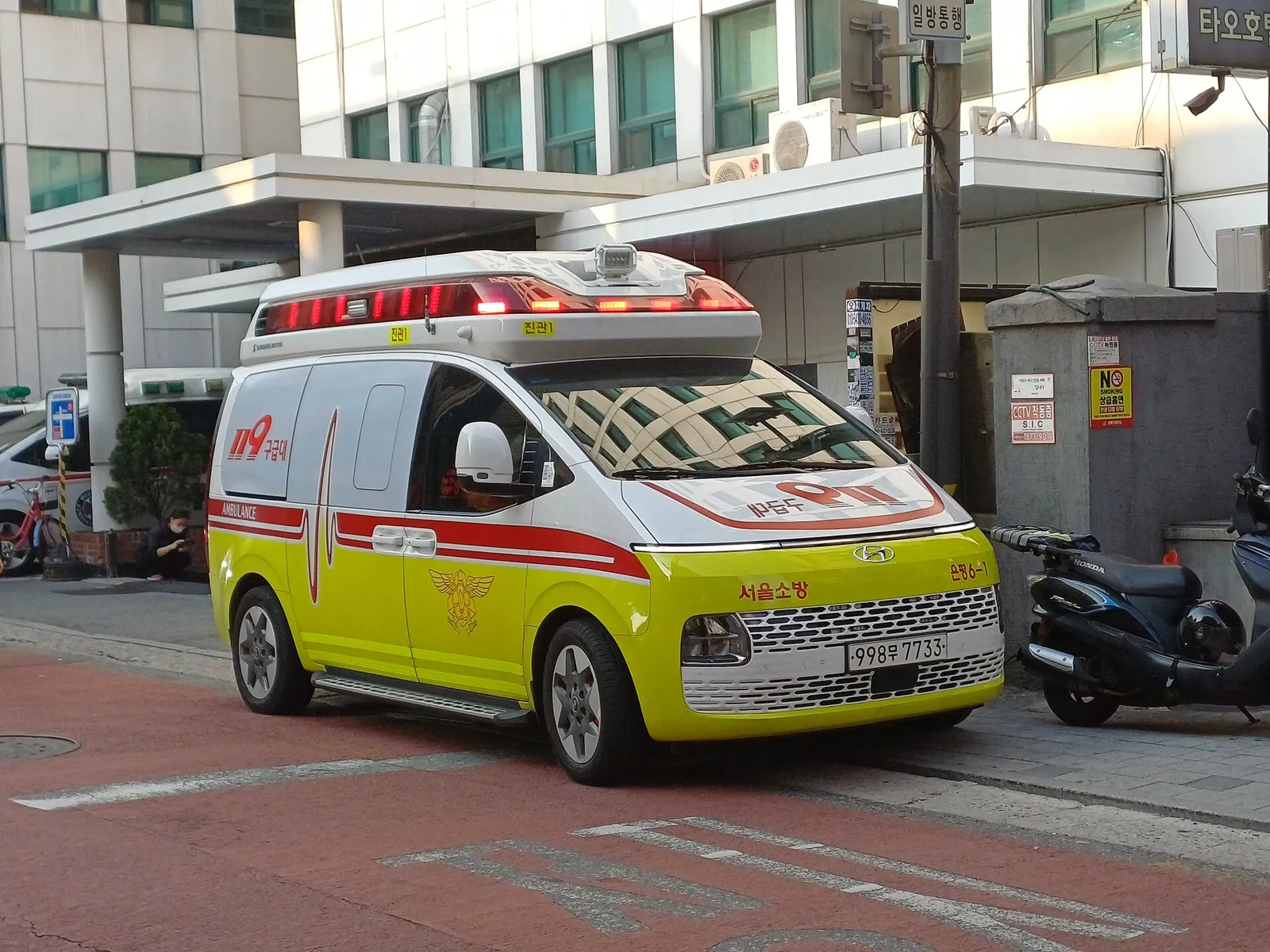
- 119 ambulance
- Free
You’ve probably seen two kinds of answers: insurers saying you can’t travel without a policy, and forum posts saying Korean healthcare is so cheap you don’t need one. Both are half right. Korea doesn’t make insurance an entry rule, and a cold or a sprained ankle costs little. The catch is that a tourist pays every won of the bill, and the hospitals that handle serious cases are free to charge foreigners more than Koreans pay.
This guide is general information, not medical or financial advice. In an emergency, call 119 first and read later.
The short version
You don’t need travel insurance to enter Korea, but most visitors should have medical cover anyway. Tourists aren’t part of Korea’s national health insurance, so you pay the full price of anything you’re treated for. For small things that’s fine: a neighborhood clinic visit is about 30,000 to 60,000 won (about $23 to $45). For anything that sends you to a big hospital, it isn’t. Korea’s health ministry has said hospitals may set foreign patients’ fees themselves, and an official involved in drafting the international-rate guidelines told Medigate News in 2022 that big hospitals usually charge about 2.5 to 3 times the insured fee.
The real question is whether you’re already covered. If your health plan or credit card covers emergency care abroad, check its limits and stop there. If not, buy a policy with medical cover before you fly. Either way, expect to pay at the desk and claim later, and keep three documents (below) from every visit.
What care costs a tourist without insurance
These are the numbers we could pin to a source, as of November 2026. None is a price list; hospitals set their own fees.
| Situation | What an uninsured tourist pays |
|---|---|
| Neighborhood clinic (의원) visit for a common illness | About 30,000 to 60,000 won (Naeil, December 2025) |
| Same visit for a Korean with national insurance | About 5,000 to 20,000 won |
| Mild case at a big hospital ER | The full bill. Insured Koreans’ own share alone rose to about 220,000 won ($168) at regional centers in September 2024 |
| Big university hospital, foreign patient | Often an international rate of about 2.5 to 3 times the insured fee (Medigate News, 2022) |
| 119 public ambulance | Free |
| Private ambulance between hospitals | 40,000 won (general) or 95,500 won (special) for the first 10 km since August 2026, plus distance and surcharges (Money Today, July 2026) |
In October 2026 the Korea Herald reported that foreign patients at national university hospitals were charged about 2.03 million won on average per outpatient (2023 to 2025 data), against 1.24 million won under the public aid scheme, though the cases weren’t matched by severity. At the far end, the Korea Times reported in July 2026 on a man who entered on a tourist visa in 2019, collapsed while working informally and, after years in hospital, left more than 840 million won ($600,000) unpaid.
For how clinics, ERs and pharmacies work day to day, see our guide to seeing a doctor in Korea.
Is insurance required to enter Korea?
No, not for a tourist. The Korea Immigration Service’s K-ETA notice and the tourist visa document lists we read don’t mention insurance, and the UK government’s travel advice for South Korea (updated May 2026) treats it as advice (“medical and dental care… can be expensive”), not an entry rule. Long-stay visas are a separate matter. If you’re applying for anything other than visa-free entry, K-ETA or a short tourist visa, check that visa’s own document list.

The free city insurance you may have read about
Two schemes from 2025 still show up in search results, and neither is something to plan around.
Gyeonggi Province (the area around Seoul, not Seoul itself) enrolled foreign visitors automatically and for free from March 12, 2025. It paid up to 1,000,000 won for injury treatment plus small fixed payments for injuries and disasters; ordinary illness wasn’t on its list. Its call center ran to December 31, 2025, and we found no notice of a 2026 renewal.
Seoul in 2025 paid up to 5,000 won per person toward insurance for foreign groups booked through Korean travel agencies, plus some Incheon transit visitors. That’s a subsidy for tour operators, not cover you can claim as an independent traveler, and it paid for death, disability and liability, not hospital bills.
What your policy should cover for Korea
Korea’s risk isn’t exotic disease; it’s ordinary accidents and the occasional serious illness billed at big-hospital rates. Look for:
- Emergency medical treatment and hospital stays with a high limit, not a few thousand dollars.
- Pay-and-claim that works abroad. Korean hospitals generally expect payment before you leave.
- A 24-hour assistance number that can issue a guarantee of payment to a hospital.
- Your activities. If you’ll ski or hike Hallasan, check those are covered.
Pre-existing conditions are usually excluded, so if you travel with a condition, read that clause first and see our guide to bringing medication into Korea.
Paying the hospital and claiming it back
Plan on paying the whole bill at the desk by card. Hanyang University Seoul Hospital’s international clinic, for example, bills later only when an assistance company has issued a guarantee of payment; otherwise patients pay in full and claim from their insurer themselves. If you’re admitted, call your insurer’s assistance line before the bill grows.
Before you leave the desk, ask for these. SafetyWing, for one, asks for receipts, itemized invoices and medical reports, and most insurers want something similar.
| Document | Korean | Note |
|---|---|---|
| Receipt | 진료비 영수증 (jinryobi yeongsujeung) | Proof of what you paid |
| Itemized bill | 진료비 세부산정내역서 | Lists each test and drug |
| Diagnosis in English | 영문 진단서 (yeongmun jindanseo) | A doctor’s statement. The 20,000 won cap Koreans pay doesn’t apply to uninsured foreigners, so ask the fee first |
Ask on the day; getting papers posted abroad later is slow. If language is the problem, the Medical Korea Information Center (1577-7129, run by the Korea Health Industry Development Institute) answers in English, Japanese, Chinese, Russian and Arabic, 24 hours a day. For emergency numbers and the tourist hotline, see emergency numbers in Korea.

Mistakes that catch visitors out
Judging by the clinic price. A cheap walk-in visit says nothing about what a broken wrist or appendix costs at a university hospital.
Going to a big hospital ER for something minor. You pay the most there, and wait longest. A clinic handles colds, cuts and stomach bugs.
Leaving without the paperwork. No itemized bill or English diagnosis often means a slow or rejected claim.
Counting on city insurance. Gyeonggi’s 2025 scheme paid injuries only, and Seoul’s never covered independent travelers’ hospital bills.
Assuming your card covers you. Card travel cover comes with conditions and limits that vary by card. Read the terms before you fly.
What we’d do
Healthy, short trip, already covered at home: check that your health plan or card pays for emergency care in Korea, note the limit and the assistance number, and skip a separate policy.
No cover from home: buy a medical travel policy with a high limit before you fly. In Korea the cost of a serious case, not a cold, is what you’re insuring against.
Skiing, hiking Hallasan or traveling with kids: make sure the policy names those activities and dependents.
Traveling with a condition or regular medication: read the pre-existing condition clause first, since most policies exclude it, and budget for paying those visits yourself.
Everyone: save 119, your insurer’s 24-hour number and 1577-7129 in your phone, and add the three claim documents to your trip checklist.
Questions people ask
Is travel insurance mandatory for South Korea?
Not for tourists. The K-ETA notice and tourist visa document lists we checked don't ask for it, and the UK government's travel advice lists it as advice, not an entry rule. Long-stay visas have their own document lists, so check yours.
How much does a hospital visit cost in Korea without insurance?
A neighborhood clinic visit for a common illness is about 30,000 to 60,000 won uninsured (Naeil, December 2025). Big university hospitals can charge foreign patients international rates of about 2.5 to 3 times the insured fee, so ER care, scans and a night on a ward climb fast.
Do Korean hospitals bill my travel insurance directly?
Usually not. Expect to pay the whole bill yourself and claim it back. Some hospitals' international clinics accept a guarantee of payment from your insurer's assistance company, so call that number before treatment if you can.
Is the ambulance free in Korea?
The 119 public ambulance is free. A private ambulance between hospitals is not: since August 2026 the base fare for the first 10 km is 40,000 won for a general ambulance and 95,500 won for a special one, before surcharges.
Does Korea offer free travel insurance for tourists?
Not one you can count on in 2026. Gyeonggi Province's free injury cover started on March 12, 2025 and its call center ran to December 31, 2025, with no 2026 renewal we could find, and Seoul's 2025 scheme only subsidized policies for groups booked through Korean travel agencies.
How we checked this
Change log
- First published.
Sources
10 of 17 from official sources. Official means the government or the operator itself, Press a news report, Other a guide, blog or reference site we used for context.
- Press Medical Times: certificate fee caps don't apply to foreign patients; hospitals may set their fees themselves (2019-06-18)
- Press Medigate News: big hospitals apply international rates of about 2.5 to 3 times the insured fee (2022-03-29)
- Press Korea Herald: international rates at national university hospitals (2026-10-07)
- Press Naeil: A winter guide to using Korean medical care for foreigners (2025-12-01)
- Press Newsis: mild patients going to the ER to pay 220,000 won instead of 130,000 won (2024-09-11)
- Press Korea Times: no family, no funds, seeking relief for vulnerable foreign patients (2026-07-29)
- Official Seongbuk-gu Office: medical service and emergency numbers for foreigners (119 ambulance free) (checked 2026-11-03)
- Press Money Today: private ambulance base fares rise, holiday surcharge added (health ministry rule change) (2026-07-12)
- Official Korea Immigration Service: K-ETA notice (2022-01-13)
- Official GOV.UK: South Korea travel advice, entry requirements and health (2026-05-14)
- Official Gyeonggi Province: free safety insurance for foreign travelers (2025-03-20)
- Official Korea.net: Seoul supports travel insurance for foreign tourists (2025-04-01)
- Official Hanyang University Seoul Hospital: international clinic payment and insurance (checked 2026-11-03)
- Official Korea Health Industry Development Institute: Medical Korea Information Center (checked 2026-11-03)
- Official SafetyWing: Nomad Insurance plans and prices (checked 2026-11-03)
- Official SafetyWing: Nomad Insurance FAQ (claims, pre-existing conditions, excluded countries) (checked 2026-11-03)
- Official Banque de France: euro reference rates, 26 October 2026 (used for won to dollar) (2026-10-26)
Spotted something out of date? Tell us and we'll re-check it.
Part of our Planning a first trip to Korea topic guide.
Read or use next
-
 Bringing medication into Korea: what's allowed and what needs paperwork
Most everyday medicine is simple. Anything Korea classes as a narcotic or psychotropic drug needs a government permit before you fly, and that's where travelers get into real trouble.
- Korea trip checklistA tick-box list that remembers your progress on this device.
-
 K-ETA in 2026 and 2027: who needs it and how to apply
Twenty-two countries can skip it until the end of 2026. Nobody has said yet what happens on January 1, 2027, so here's how to plan around that.
-
 Korean etiquette for visitors: the rules that matter and the ones that don't
Nobody expects a tourist to know every custom. A handful of things do matter, though, and they're easy. Here's which is which.