Korean etiquette for visitors: the rules that matter and the ones that don't
Nobody expects a tourist to know every custom. A handful of things do matter, though, and they're easy. Here's which is which.

Quick answer
- Locals genuinely care about: shoes off where there's a raised floor, washing before getting into a bathhouse pool, keeping your voice down on the subway, and respect toward older people.
- Easy wins: give and receive things with two hands, pour drinks for others rather than yourself, and don't stand chopsticks upright in rice.
- No tipping. Menu prices must include tax and service, and a tip jar can actually draw complaints from Koreans.
- Mostly overstated for tourists: deep bowing, ranking everyone by age, and the number 4. A small nod and a smile cover most situations.
- Stay out of politics at rallies; foreigners are barred from political activity under the Immigration Act, though it's rarely enforced.
- Tipping
- Not expected; prices include service
- Pink subway seats
- For pregnant women
- Writing names in red
- Avoid; linked to death
- Chopsticks upright in rice
- Avoid; linked to death
Most etiquette lists for Korea read like a minefield: bow at the right angle, never write in red, never touch the number 4, never pour your own soju. In reality, Koreans don’t expect visitors to know the full set, and most will happily overlook a slip from someone obviously new. What people notice is the small group of habits that affect everyone around you: noise, shoes, hygiene, and how you treat older people. Get those right and you’re fine.
The short version
Take your shoes off where there’s a raised floor or a pile of shoes at the door. Wash properly before getting into a bathhouse pool. Keep your voice and your phone down on public transport, and leave priority seats for the people they’re meant for. Use two hands when giving or receiving something from an older person, and don’t tip. That covers most of what matters.
Everything else, like bowing depth, drinking rituals and number superstitions, is good to know and rarely a big deal if you get it wrong.
What locals actually care about
Shoes. Homes are shoes-off, always. So are many guesthouses, temples’ inner halls, some clinics and restaurants with floor seating on a raised platform. The cue is simple: a step up, a shoe rack or a row of shoes at the edge. Wearing outdoor shoes onto that floor is one of the few things that will get a sharp reaction.
Older people. Respect for age runs through Korean daily life. At the table, the Korean embassy in Norway’s guidance says that in formal settings you wait for the oldest person to take the first bite. On the subway, it means giving up a seat. You don’t need to perform it, just notice who’s older and give them the first turn.
Noise in shared spaces. Subway cars are generally quiet, with people on phones using earphones and keeping calls short. A loud group stands out. Seoul Metro has publicly linked noisy tourist groups with complaints from other riders, and the backlash to its comment showed how sensitive the subject is.
Bathhouse hygiene. Covered below, and it’s not optional.
Dining and drinking
Here’s what the Korean embassy guidance and common practice say, with an honest note on how strict each one is.
| Custom | What to do | How much it matters |
|---|---|---|
| Chopsticks | Don’t stand them upright in rice; it’s associated with death rites | Matters. Rest them on the bowl or table |
| Starting the meal | In formal settings, wait for the oldest person to start | Matters at a family or business meal, not at a fried-chicken place |
| Pouring | Pour for others; let someone pour for you | Matters in a group, relaxed among friends |
| Pouring for elders | Use two hands, or one hand with the other supporting the wrist | Polite and noticed |
| Drinking with elders | Turn your head slightly away when you drink | Business and family settings, less so with friends |
| Before and after eating | “Jal meokgesseumnida” before, “jal meogeosseumnida” after | Nice to say, especially to a host |
Splitting the bill used to be awkward in some circles, with the senior person or the inviter often paying. Among younger people, splitting is normal. If an older Korean insists on paying, thank them and offer to get the next coffee.
Eating alone is completely normal at many places, though some barbecue spots have two-person minimums. Our piece on solo dining in Korea covers which.
Tipping, or rather not
Korea doesn’t do tipping. Under a 2013 revision to the Food Sanitation Act, restaurant menu prices must include tax and service charges, and the restaurant has to charge the listed price. Handing over a tip voluntarily isn’t illegal, but tipping is so unexpected that staff may try to give the money back.
In fact, the backlash runs the other way. The Korea Times reported in 2025 on restaurants that put out tip jars or added a “staff dinner” charge at the kiosk, and the public response was mostly negative. So leaving cash on the table won’t earn you anything, and you can relax about calculating percentages. Valet parking is the one exception the Korea Times notes, where tipping is still customary.
Subway and public behavior
Priority seats. Each car has seats at the ends for older people, people with disabilities and pregnant women, and Seoul Metro has also marked pink seats for pregnant women since 2013. There’s no legal penalty for sitting in the pink seats, and the city says it has no basis to enforce exclusive use, but they generate thousands of complaints a year. The practical approach is to leave both kinds of priority seat free, or get up immediately if someone who needs it boards.
Phones and voices. Earphones in, calls short and quiet. Video with sound on a speaker will get looks.
Queues and escalators. People line up on the platform at the marked door positions. Let passengers off before you board.
Public displays. Holding hands is fine. Heavy public affection still draws attention, especially from older people.
Gestures, gifts and superstitions
Two hands. Give and receive things such as cards, gifts, money and drinks with two hands, or with your right hand while your left hand touches your right wrist or forearm. It’s the single easiest way to come across as polite, and it’s used constantly with older people and in business.
Bowing. For a visitor, a small nod of the head with “annyeonghaseyo” or “gamsahamnida” covers nearly every situation. With an older person, the embassy guidance describes a slight bow with a two-handed handshake, and says the older person usually offers to shake first.
Red ink for names. Writing someone’s name in red is considered extremely rude because it’s associated with death, according to the Korea JoongAng Daily. This one is real: avoid it on cards and notes.
The number 4. “Sa” (four) sounds like the character for death, so some buildings label the fourth floor “F” or skip it, and Incheon Airport has no gates 4, 44 or 244. For a visitor this is trivia rather than a rule. Nobody will be upset if you buy four of something.
Fan death. You may hear older Koreans warn about sleeping with a fan on in a closed room. Doctors say no such death has ever been recorded. You don’t need to argue the point.
Bathhouses
If you go to a jjimjilbang or public bath (see whether it’s worth it), the rules are firm:
- Wash thoroughly before getting into any pool. This is the cardinal rule.
- Baths are single-sex and nude. Swimsuits aren’t worn in the bath area. The shared sauna and rest areas are mixed, and you wear the provided clothes there.
- Keep your small towel out of the water, and tie up long hair so it doesn’t trail in the bath.
- No splashing or loud chatter in the tubs.
- Tattoo policies vary by venue; check before you go if you have visible tattoos.
Politics and sensitive topics
Korea has frequent, mostly peaceful rallies, especially around Gwanghwamun and City Hall in Seoul. Watching from the edge is one thing; joining is another. Article 17 of the Immigration Act says foreigners staying in Korea may not engage in political activity, and the Justice Minister can order a stop or deportation. The Korea Times reported in 2025 that the provision had not actually been enforced and doesn’t define political activity, but some embassies have told their citizens to stay away from demonstrations. As a tourist, there’s no upside to testing it.
On history: Japan’s colonial rule of Korea is still an emotional subject. The Rising Sun flag, used by the Imperial Japanese Army, is widely seen in Korea as a symbol of that era, and wearing it on clothing will offend people. Jokes about North Korea land badly with many Koreans too. None of this means avoiding conversations about history; people are often happy to talk. It means not treating it as a joke.
What we’d do
First-time visitors on a short trip: learn “annyeonghaseyo” and “gamsahamnida,” use two hands with older people, take shoes off when you see the cue, and keep quiet on the subway. That’s enough. Our phrase cards help with the words.
Going out drinking with Korean friends or colleagues: pour for others, let them pour for you, and turn slightly away when drinking with someone much older. Follow their lead on how formal it is.
Visiting a bathhouse: wash first, towel out of the water, voice down.
Anyone who gets it wrong: apologize with a smile and move on. Visitors are given far more slack than these lists suggest.
Questions people ask
Should I tip in Korea?
No. Since 2013, menu prices have had to include tax and service charges, and tipping isn't part of the culture. Voluntary tips aren't illegal, but restaurants that ask for them have faced public backlash.
Do I need to bow in Korea?
A small nod of the head when you say hello or thank you is plenty for a visitor. With an older person, a slight bow with a handshake is polite.
Can I sit in the pink seats on the Seoul subway?
They're priority seats for pregnant women. There's no fine, but many Koreans leave them empty or get up when needed, so it's simplest to leave them free.
Do I have to take my shoes off in restaurants?
Only where the dining area is a raised floor and you see shoes at the edge. In homes, always. Follow what others have done.
Is it rude to pour my own drink?
At a casual meal with friends, nobody minds much. In a group, especially with older people, the custom is to pour for others and let them pour for you.
Is it OK to have tattoos in a Korean bathhouse?
Policies vary by venue, so check before you go. The rule every bathhouse cares about is washing thoroughly before you get into the water.
How we checked this
Change log
- First published.
Sources
- Embassy of the Republic of Korea in Norway: Korean etiquette and manners (checked 2026-10-09)
- Korea Times: why tipping culture remains controversial in Korea (2025-08-07)
- Korea Herald: should priority seating for pregnant women be kept empty? (2024-08-06)
- Korea JoongAng Daily: beware fan death and evil mice doppelgangers (2022-10-15)
- Lonely Planet: how to visit a South Korean bathhouse (2026-01-05)
- Korea Times: political activity by foreign nationals turns focus on existing law (2025-04-08)
- CNN: why South Korea wants Japan to ban the Rising Sun flag from the Tokyo Olympics (2019-09-06)
- South China Morning Post: South Korean subway operator apologises over remarks on Chinese tourists (2024-11-19)
Spotted something out of date? Tell us and we'll re-check it.
Read or use next
-
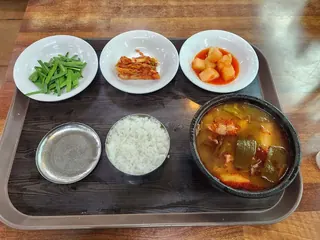 Eating alone in Korea: where you'll be welcome and where you won't
Most of Korea feeds solo diners without blinking. The exceptions are predictable, and knowing them saves you an awkward walk back out the door.
Eating alone in Korea: where you'll be welcome and where you won't
Most of Korea feeds solo diners without blinking. The exceptions are predictable, and knowing them saves you an awkward walk back out the door.
-
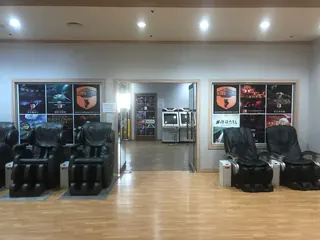 Is a jjimjilbang worth it? An honest guide to Korean saunas
Cheap, warm, very Korean and more relaxing than it sounds. The nude bath part is real, though, and the famous old spas in the guidebooks have mostly gone.
Is a jjimjilbang worth it? An honest guide to Korean saunas
Cheap, warm, very Korean and more relaxing than it sounds. The nude bath part is real, though, and the famous old spas in the guidebooks have mostly gone.
- Show-on-your-phone Korean phrase cardsTap a phrase and it fills your screen, ready to show.
-
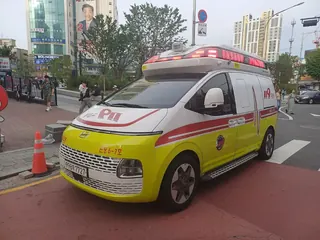 Emergency numbers in Korea: who to call, in English, for what
Save four numbers before you land: 112, 119, 1330 and your embassy. Everything else on this page is for the slower kind of trouble, like a phone left in a taxi.
Emergency numbers in Korea: who to call, in English, for what
Save four numbers before you land: 112, 119, 1330 and your embassy. Everything else on this page is for the slower kind of trouble, like a phone left in a taxi.