Seeing a doctor in Korea as a tourist: clinics, hospitals, ERs and pharmacies
For a cold, a cut or a stomach bug, a small neighborhood clinic and the pharmacy next door will sort you out fast. Big hospital ERs are for real emergencies, and they cost like it.
Quick answer
- For everyday illness, go to a clinic (uiwon, 의원): walk in, no appointment usually needed. A Korean daily put an uninsured visit at about 30,000 to 60,000 won.
- Pharmacies (yakguk, 약국) are everywhere and sell common painkillers, cold and stomach medicine over the counter. Prescriptions from a clinic are filled at a pharmacy, not at the clinic.
- Big hospital ERs are for emergencies. Since September 2024, mild cases at regional and local emergency centers pay far more, and uninsured foreigners pay the full bill.
- At night, 24-hour convenience stores sell a short list of basic medicines, and Seoul runs public late-night pharmacies open until 1am.
- Need an interpreter? Call 1330 (24 hours in English) and they can do a three-way call with the doctor or pharmacist.
- Clinic visit, uninsured
- About 30,000-60,000 won
- Ambulance (119)
- Free
- Interpretation
- 1330, 24h in English
- Seoul late-night pharmacies
- 10pm-1am
Getting sick on a trip is miserable, and getting sick somewhere you can’t read the signs is worse. The good news is that Korea makes minor medical care quick and fairly cheap, even for people with no Korean insurance. The neighborhood doctor is usually a walk-in, the pharmacy is usually next door, and the whole thing can take less than an hour. Where visitors go wrong is heading straight to a big university hospital emergency room with a sore throat. That costs a lot more and takes a lot longer.
This guide is general information, not medical advice. If someone can’t breathe, is unconscious or is badly hurt, skip the reading and call 119.
The short version
For colds, fevers, stomach trouble, rashes, small cuts and sprains, go to a clinic, called an uiwon (의원). They’re small private practices, often on the second or third floor of commercial buildings, with the specialty on the sign: internal medicine (내과), ENT (이비인후과), dermatology (피부과), orthopedics (정형외과). You walk in, show your passport, pay at the desk, and take your prescription to a pharmacy (약국, yakguk) downstairs.
Large general and university hospitals are for hospitalization, scans, surgery and real emergencies. Their ERs prioritize serious cases, and mild cases pay much more than they used to.
At night or on a weekend, your options are a 24-hour convenience store for basic medicine, a late-night pharmacy, or an ER if it’s serious.
Clinics, hospitals and international centers
Clinics (의원). The everyday option. Most Koreans see a clinic first for anything routine. Hours are usually daytime on weekdays plus Saturday mornings, though they vary, and many close for lunch. You don’t usually need an appointment. Naver Map and KakaoMap will show nearby clinics by specialty; see our Naver Map guide if you haven’t set it up.
Hospitals (병원, 종합병원, 대학병원). General and university hospitals do the heavy lifting: specialists, imaging, surgery, inpatient care. They are slower to get into for walk-ins and not where you go for a cold.
International centers. Several big Seoul hospitals run dedicated centers for foreign patients, including Seoul National University Hospital, Severance Hospital and Samsung Medical Center, according to the Korean daily Naeil. Severance’s International Health Care Center in Sinchon says it offers English-speaking staff and interpretation for other languages including Russian, Chinese, Japanese and Mongolian. These centers are useful if you need something beyond a clinic visit and want help with booking, paperwork and language. Call or check the hospital’s English site before you go.
What it costs without Korean insurance
Tourists aren’t covered by Korea’s National Health Insurance, so you pay the uninsured rate and claim it back from your travel insurer later.
| Situation | What to expect |
|---|---|
| Clinic visit for a common illness | About 30,000 to 60,000 won uninsured (Naeil, 2025) |
| Same visit with Korean insurance, for comparison | About 5,000 to 20,000 won |
| University hospital outpatient care | Much more; some national university hospitals charge foreign patients “international rates” |
| 119 public ambulance | Free |
| Pharmacy medicine | Prices vary by shop; there’s no set retail price for OTC drugs |
Treat the clinic figure as a rough guide. Tests, injections, IV drips and X-rays all add to the bill. On university hospitals, the Korea Herald reported in October 2026 that some national university hospitals apply international rates (normally used for medical tourists and uninsured patients) and that each hospital sets its own criteria and charges. Ask about cost at the desk before treatment if it matters to you, and keep every receipt.
The ER, and why mild cases pay more
Korean ERs triage by severity, and big-hospital ERs have been under heavy strain since 2024. To push mild cases toward clinics, the government raised the patient share of the bill for mild and non-emergency patients at regional and local emergency centers from 50 to 60 percent to 90 percent, effective September 13, 2024. The health ministry estimated the average bill for a mild case at a regional emergency center would go from about 130,000 won to about 220,000 won, and at a local emergency center from about 60,000 won to about 100,000 won.
Those numbers are for insured Koreans. As an uninsured tourist you pay the whole bill regardless, so a non-urgent ER visit at a major hospital can easily run well into six figures in won before any tests.
So when to use the ER: trouble breathing, chest pain, severe bleeding, a head injury, numbness in the limbs, sudden severe pain. For those, call 119. The ambulance is free, and paramedics can give first-aid guidance and take you to a suitable ER. The 119 service also provides interpretation for foreigners.
For everything less urgent, especially at night, use the E-gen emergency medical portal run by the National Emergency Medical Center, or call 129 (Ministry of Health and Welfare) or 120 (city call center) to find a clinic, hospital or pharmacy that’s open. On public holidays, Naver Map and KakaoMap add a tab for clinics open over the holiday.
Pharmacies and what you can buy
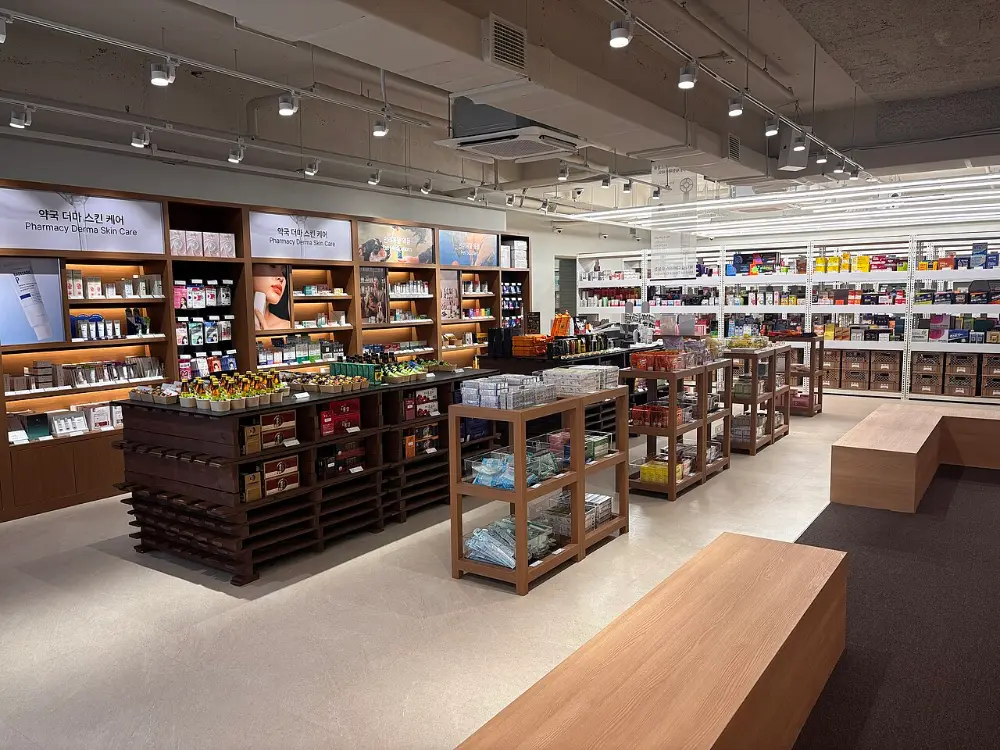
Pharmacies are signed 약국 (often just a big 약) and are easy to find near clinics, subway stations and in shopping streets. Pharmacies in tourist areas like Myeongdong and Hongdae often have multilingual labels and staff used to foreign customers, according to the Korea JoongAng Daily.
Over the counter you can buy the usual: painkillers and fever reducers, cold and cough medicine, digestive and anti-diarrhea medicine, motion sickness tablets, antiseptic and plasters, pain patches. Describe your symptoms and the pharmacist will suggest something. Prescription drugs need a prescription from a Korean doctor, which is why the clinic-then-pharmacy routine exists. Don’t expect a pharmacist to hand over antibiotics because you ask.
Two things trip visitors up. First, Olive Young and similar beauty stores don’t sell OTC or prescription drugs; medicine is sold at pharmacies. Second, OTC prices aren’t fixed, so the same box can cost different amounts in different shops.
If you take regular medication, bring enough from home. Some common drugs are controlled in Korea, so check our guide to bringing medication into Korea before you pack.
Nights, weekends and convenience stores
Most pharmacies keep roughly the same hours as clinics. After that:
Convenience-store medicine. Since 2012, 24-hour convenience stores can sell a short government list of “safety household medicines.” The list has 13 products on paper, but two children’s Tylenol products haven’t been made since 2022, so about 11 are actually on shelves: fever and pain relievers (including Tylenol), cold medicine, digestive tablets and pain patches. Children under 12 can’t buy them, and quantities per purchase are limited. The health ministry said in July 2026 it plans to expand the list to up to 20 items, so check what’s on the shelf.
Seoul’s public late-night pharmacies. Seoul designates public late-night pharmacies open from 10pm to 1am. The 2025 list had 38 across all 25 districts, with at least one open every day in each district. The current list is on the Seoul city website, or search 공공심야약국 in Naver Map.
Holiday on-duty pharmacies and clinics. Over Seollal and Chuseok, a rota of clinics and pharmacies stays open. Use E-gen, 129, 120, or the holiday tab in Naver Map or KakaoMap.
Getting help with language
1330 Korea Travel Hotline. Free tourist line run by the Korea Tourism Organization. English, Japanese and Chinese are available 24 hours; several other languages run during the day. They can do a three-way call so the doctor or pharmacist can talk to the interpreter. Details in our emergency numbers guide.
Medical Korea call center, 1577-7129. Run for foreign patients, with information on medical institutions in English, Chinese, Japanese, Russian and Arabic. A district office lists it as weekdays 9am to 6pm, so check before relying on it at night.
119. Interpretation is available for emergency calls.
It also helps to have a few symptom words ready. Our phrase cards include the basics.
Mistakes that cost visitors time and money
Going to a university hospital ER for something minor. You’ll wait behind serious cases and pay a lot more. A clinic is faster and cheaper.
Forgetting your passport. Clinics register you by ID.
Throwing away receipts. Your insurer will want the itemized receipt and, often, a medical certificate or diagnosis note (진단서 or 소견서). Ask for these before you leave, because getting them later is a hassle and sometimes costs extra.
Assuming a pharmacy can replace a doctor. For anything that needs a prescription, see a clinic first.
Not checking your travel insurance. Read the policy before you fly: whether it pays the provider directly or reimburses you, what documents it needs, and its emergency assistance number.
What we’d do
Cold, fever, stomach bug on a short trip: find the nearest internal medicine clinic (내과) on Naver Map, walk in with your passport, then fill the prescription downstairs. Budget about 30,000 to 60,000 won for the visit plus medicine.
Something that can wait until morning at 11pm: convenience store for Tylenol or a cold remedy, or a public late-night pharmacy if you’re in Seoul. Go to a clinic when it opens.
Something serious or frightening: call 119. Don’t waste time hunting for an English-speaking hospital first.
Need tests, a specialist or follow-up care: contact an international center at a major Seoul hospital and expect to pay more.
Everyone: buy travel insurance with medical cover before you leave, save the insurer’s emergency number in your phone, and add it to your trip checklist.
Questions people ask
Do tourists need an appointment to see a doctor in Korea?
Not at most neighborhood clinics. You walk in with your passport, register at the front desk and wait. Large university hospitals are a different matter and usually work by appointment, often through an international center.
How much does a doctor's visit cost without Korean insurance?
A Korean daily, Naeil, put an uninsured visit for a common illness at about 30,000 to 60,000 won. Tests, injections and big hospitals cost more, and some university hospitals charge foreign patients higher international rates.
Is the ambulance free in Korea?
Yes, the 119 public ambulance is free of charge. You still pay the hospital for any treatment.
Can I buy antibiotics at a Korean pharmacy without a prescription?
Treat prescription medicine as prescription-only. Pharmacies sell over-the-counter painkillers, cold and digestive medicine; for anything stronger, see a clinic first and take the prescription to a pharmacy.
What can I buy at a convenience store at night?
Twenty-four-hour convenience stores sell a government-approved list of household medicines, such as Tylenol, a cold remedy, digestive tablets and pain patches. Children under 12 can't buy them.
Who can interpret for me at a clinic?
The 1330 Korea Travel Hotline offers interpretation in English, Japanese and Chinese around the clock. The Medical Korea call center on 1577-7129 handles medical questions in several languages on weekday office hours.
How we checked this
Change log
- First published.
Sources
- Naeil: A winter guide to using Korean medical care for foreigners (2025-12-01)
- Naeil: How foreigners use the Korean medical system (2026-06-26)
- Korea Herald: undocumented migrants are charged international rates at some public hospitals (2026-10-07)
- Newsis: mild patients going to the ER to pay 220,000 won instead of 130,000 won (2024-09-11)
- Kormedi: mild ER patients' copay rises from 50-60% to 90% (2024-09-13)
- Kormedi: where to go if you get sick over the holidays (2025-01-24)
- Seongbuk-gu Office: medical service and emergency numbers for foreigners (checked 2026-10-09)
- Yeongdeungpo-gu Office: free interpretation services (Medical Call Center and 1330) (checked 2026-10-09)
- Busan Metropolitan City: 1330 Korea Travel Hotline (2019-01-18)
- Busan Metropolitan City: OTC medicines at 24-hour convenience stores (checked 2026-10-09)
- Money Today via Supple: convenience-store medicines to expand to up to 20 items (2026-07-20)
- Etoday: Seoul adds five public late-night pharmacies (2025-01-06)
- Korea JoongAng Daily: Korean pharmacies just what the doctor ordered with new tourism trend (2025-09-27)
- Severance Hospital: International Health Care Center overview (checked 2026-10-09)
Spotted something out of date? Tell us and we'll re-check it.
Read or use next
-
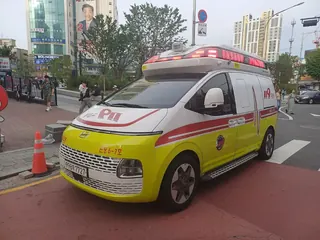 Emergency numbers in Korea: who to call, in English, for what
Save four numbers before you land: 112, 119, 1330 and your embassy. Everything else on this page is for the slower kind of trouble, like a phone left in a taxi.
Emergency numbers in Korea: who to call, in English, for what
Save four numbers before you land: 112, 119, 1330 and your embassy. Everything else on this page is for the slower kind of trouble, like a phone left in a taxi.
-
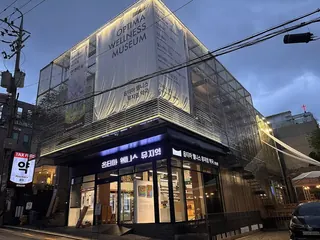 Bringing medication into Korea: what's allowed and what needs paperwork
Most everyday medicine is simple. Anything Korea classes as a narcotic or psychotropic drug needs a government permit before you fly, and that's where travelers get into real trouble.
Bringing medication into Korea: what's allowed and what needs paperwork
Most everyday medicine is simple. Anything Korea classes as a narcotic or psychotropic drug needs a government permit before you fly, and that's where travelers get into real trouble.
- Show-on-your-phone Korean phrase cardsTap a phrase and it fills your screen, ready to show.
- Korea trip checklistA tick-box list that remembers your progress on this device.