3 days in Seoul for first-timers: a realistic itinerary
Three days is enough for Seoul's highlights if you stop crossing the city twice a day. Group by neighborhood and the subway time mostly disappears.
Quick answer
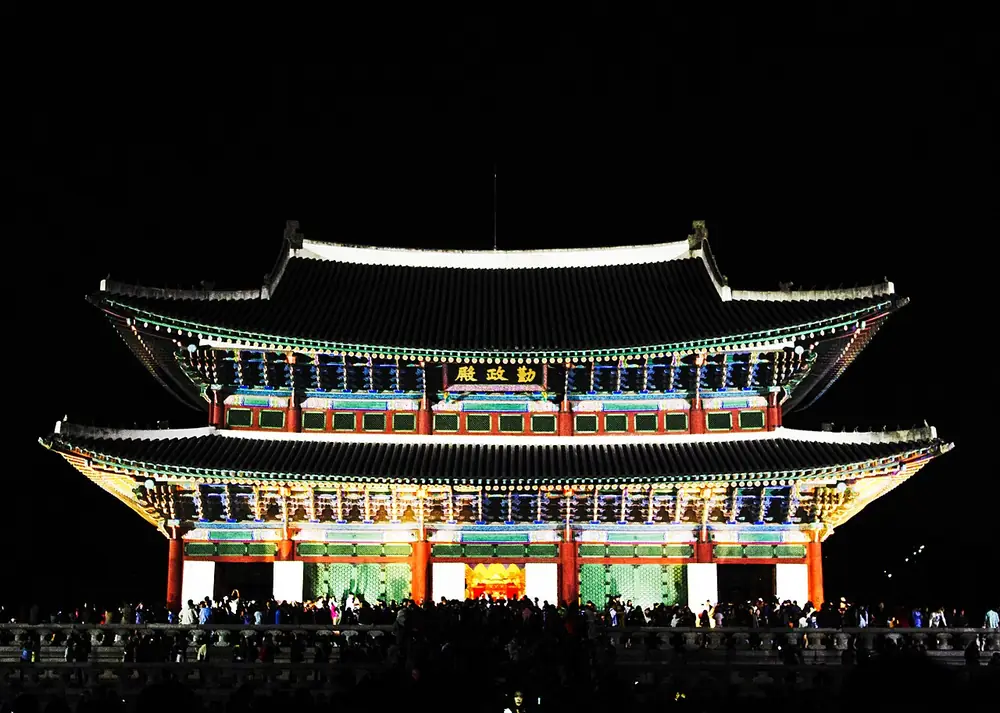
- Day 1, the old city: Gyeongbokgung at opening, Bukchon before 5 p.m., Insadong and Ikseon-dong, dinner at Gwangjang Market.
- Day 2, the center: Namdaemun Market, Myeongdong, Namsan and N Seoul Tower, then Euljiro at night.
- Day 3, the west side: Yeonnam-dong, Hongdae and Mangwon Market, ending at the Han River for sunset.
- Don't put the palace day on a Tuesday: Gyeongbokgung closes on Tuesdays, Changdeokgung on Mondays.
- Gyeongbokgung closed
- Tuesdays
- Palace entry
- 3,000 won; free in hanbok
- Bukchon red zone
- Tourists 10 a.m. to 5 p.m. only
- Subway fare
- 1,550 won by card
Most first trips to Seoul go wrong the same way. You pick the famous places from a list, then zigzag between them, and by the afternoon of day two you’ve spent three hours on the subway and seen a palace, a tower and a lot of transfer corridors. Seoul is big, but its best-known sights sit in a few tight clusters. Do one cluster a day and you walk more, ride less, and still see the things you came for.
This plan assumes three full days, a hotel somewhere central (our where to stay in Seoul guide covers the options), and normal human energy levels.
The short version
Day 1 is the old royal city north of Jongno: Gyeongbokgung, Bukchon, Insadong and Ikseon-dong, with dinner at Gwangjang Market. Day 2 is the center: Namdaemun Market, Myeongdong and Namsan, with drinks in Euljiro. Day 3 is the west: Yeonnam-dong, Hongdae and Mangwon, ending on the Han River. Each day has one or two subway rides at most.
The only hard rule is the calendar. Gyeongbokgung is closed on Tuesdays and Changdeokgung on Mondays, so put the palace day on any other day, or swap palaces to suit.
Day 1 in the palaces and old city
Start at Gyeongbokgung when it opens at 9 a.m. The crowds and tour groups build through the morning, and you want the courtyards before they do.
Hours change with the season:
| Months | Open | Last entry |
|---|---|---|
| March to May, September to October | 9 a.m. to 6 p.m. | 5 p.m. |
| June to August | 9 a.m. to 6:30 p.m. | 5:30 p.m. |
| November to February | 9 a.m. to 5 p.m. | 4 p.m. |
If a Tuesday is a public holiday, the palace opens and closes on the next working day instead. Adult entry is 3,000 won. If you wear hanbok you get in free, which is why you’ll see rental shops all around Anguk and Gyeongbokgung stations. Foreigners aged 18 and under or 65 and over are also free. Fees for palaces and royal tombs are due to rise from January 1, 2027, after being frozen since 2005, with the new rates to be published in November 2026. Give yourself about two hours inside.
From the palace’s east side, walk up into Bukchon. This is where visitors get caught. The densest lane, Bukchon-ro 11-gil (the “red zone”), is open to tourists only from 10 a.m. to 5 p.m. People live in these houses. Outside those hours, wardens ask sightseers to leave, and since March 1, 2025 they can fine you 100,000 won if you don’t. Even inside the hours, keep your voice down and don’t sit on doorsteps for photos.
From Bukchon, drift south through Samcheong-dong to Insadong for lunch and a browse, then east to Ikseon-dong’s small hanok lanes of cafes and restaurants. All of this is walkable.
If your Day 1 lands on a Tuesday, swap Gyeongbokgung for Changdeokgung, which sits on Bukchon’s east side and is closed on Mondays instead. Its Secret Garden (Huwon) needs a separate ticket. Adult entry to the main palace is also 3,000 won.
For dinner, ride one stop east on Line 1 from Jongno 3-ga to Jongno 5-ga (or just walk) for Gwangjang Market: bindaetteok (mung bean pancakes), mayak gimbap and noodles at the stall counters. Some stalls are cash only, so carry won. Walk it off along Cheonggyecheon stream heading west, which is lit in the evening.
Day 2 around Myeongdong and Namsan
Start at Namdaemun Market near Hoehyeon Station (Line 4), which is busiest in the morning and quieter after lunch. It’s a real wholesale market: clothes, kitchenware, ginseng, street food. Walk north to Deoksugung if you want a small, calm palace, or east to Myeongdong.
Myeongdong is skincare shops and street food stalls. It’s convenient and a bit of a tourist trap at the same time. An hour is enough unless you’re shopping seriously, in which case keep your passport with you for the instant tax refund at the till.
Mid-afternoon, head up Namsan. You can walk up from Myeongdong on paved paths (steep, but fine in decent shoes) or take the cable car from its station above Myeongdong. At the top, the view from the base of N Seoul Tower is free. Paying for the observatory is optional. Go up around sunset if you can, so you get the city in daylight and then lit up.
If the tower doesn’t appeal, Naksan Park near Hyehwa Station gives you a night skyline from the old city wall for nothing.
For the evening, come down to Euljiro. The area around Euljiro 3-ga has old printing shops by day and small bars and beer halls tucked into them at night. It’s a short taxi ride from the bottom of Namsan.
Day 3 on the west side and the river
Seoul’s west side is younger and slower to wake up. Many shops and cafes in this area don’t open until late morning, so this is your sleep-in day.
Take the subway to Hongik University Station (Line 2, AREX and the Gyeongui-Jungang Line). Exit toward Yeonnam-dong and walk the Gyeongui Line Forest Park, a strip of park built on an old rail line, lined with cafes and small restaurants. Hongdae itself is street performers, clubs and shops, best in the late afternoon and evening.
From there, it’s a short taxi or bus ride to Mangwon Market for cheap snacks, then walk on to Mangwon Hangang Park. Buy chicken and a beer at a convenience store and sit on the river at sunset. That’s what locals do with a free evening, and it’s a good last night.
If Hongdae isn’t your scene, swap Day 3 for Seongsu-dong and Seoul Forest on the east side: pop-up stores, converted warehouses and a big park. Same pace, different crowd.
Getting around between the clusters
The plan works because each day needs only one or two subway rides. A trip costs 1,550 won by card. If you’ll ride three or more times a day, a 3-day Climate Card pass at 10,000 won (plus 3,000 won for the card) pays for itself. Our transit card comparison explains which to get.
Use Naver Map or KakaoMap for directions rather than Google Maps, which is patchy for walking directions here. Taxis are cheap enough for short hops between clusters, especially in a group of three or four.
Mistakes that catch first-timers
- Palace on its closed day. Gyeongbokgung is closed on Tuesdays, Changdeokgung and Deoksugung on Mondays. Check before you build the day around one.
- Bukchon at dusk. The red zone closes to tourists at 5 p.m. Golden-hour photos there are now the one thing you can’t have.
- Arriving after last entry. Gyeongbokgung stops letting people in an hour before closing, so 4 p.m. in winter.
- Trying to fit too much in. If you add a day trip, it replaces one of these days, not part of one.
- Leaving the Han River out. It costs nothing and it’s the most Seoul thing you’ll do.
What we’d do
First trip, three full days: run the plan as written, palace day first so you can move it if the weather turns.
Arriving on day one in the afternoon: skip the palace, do Insadong, Ikseon-dong and Gwangjang Market that evening, and push Gyeongbokgung and Bukchon to the next morning.
Traveling with older parents: keep the palaces and Namsan (use the cable car), cut Hongdae, and take taxis between clusters.
Want more than three days: add a day trip from our day trips from Seoul list, or head south with our 7-day Seoul and Busan itinerary.
Questions people ask
Is Gyeongbokgung free if I wear hanbok?
Yes. Visitors wearing hanbok get in free, as do foreigners aged 18 and under or 65 and over. Everyone else pays 3,000 won as of October 2026.
Are palace fees going up?
Yes. The Korea Heritage Service plans new palace and royal tomb fees from January 1, 2027, with the new rates due to be announced in November 2026. They have been frozen since 2005.
Can I visit Bukchon Hanok Village in the evening?
Not the main lane. In the red zone around Bukchon-ro 11-gil, tourists may visit only from 10 a.m. to 5 p.m., and officers can fine you 100,000 won if you ignore a warning.
Is N Seoul Tower worth it?
The walk or cable car up Namsan and the free view from the base are worth it. Paying for the observatory is optional, and free viewpoints like Naksan Park give you a similar night skyline.
Should I get a Climate Card for three days?
Probably, if you ride three or more times a day. The 3-day pass is 10,000 won plus 3,000 won for the card, but it doesn't work on the train in from Incheon Airport.
How we checked this
Change log
- First published.
Sources
- Yonhap (via Daum): palace and royal tomb fees to rise from January 2027 (2026-08-05)
- KTripTips (Korea Tourism Organization data): Gyeongbokgung visitor information (checked 2026-10-09)
- Seoul Metropolitan Government Mediahub: palace hours and closed days (2015-01-13)
- Financial News: Bukchon red zone fines from March 1 (2025-02-28)
- Korea Times: Seoul's Bukchon Hanok Village to restrict visits (2024-10-30)
Spotted something out of date? Tell us and we'll re-check it.
Read or use next
-
 Where to stay in Seoul: neighborhoods compared honestly (2026)
The subway is good enough that you can't pick badly. But your neighborhood decides how your evenings feel and how much of your trip happens underground.
Where to stay in Seoul: neighborhoods compared honestly (2026)
The subway is good enough that you can't pick badly. But your neighborhood decides how your evenings feel and how much of your trip happens underground.
-
 T-money vs WOWPASS vs Climate Card: which transit card to get in 2026
Three cards, one tap at the gate. Here's which one saves you money, depending on how you'll actually move around.
T-money vs WOWPASS vs Climate Card: which transit card to get in 2026
Three cards, one tap at the gate. Here's which one saves you money, depending on how you'll actually move around.
-
 7 days in Seoul and Busan: an itinerary that doesn't waste time
Four days in Seoul, a two-hour train, three days by the sea. The trick is doing Busan by area and not dragging your suitcase across it.
7 days in Seoul and Busan: an itinerary that doesn't waste time
Four days in Seoul, a two-hour train, three days by the sea. The trick is doing Busan by area and not dragging your suitcase across it.
-
 Day trips from Seoul, ranked honestly
Seven trips people take out of Seoul, ranked by how much you get for the hours you spend getting there and back.
Day trips from Seoul, ranked honestly
Seven trips people take out of Seoul, ranked by how much you get for the hours you spend getting there and back.