T-money vs WOWPASS vs Climate Card: which transit card to get in 2026
Three cards, one tap at the gate. Here's which one saves you money, depending on how you'll actually move around.
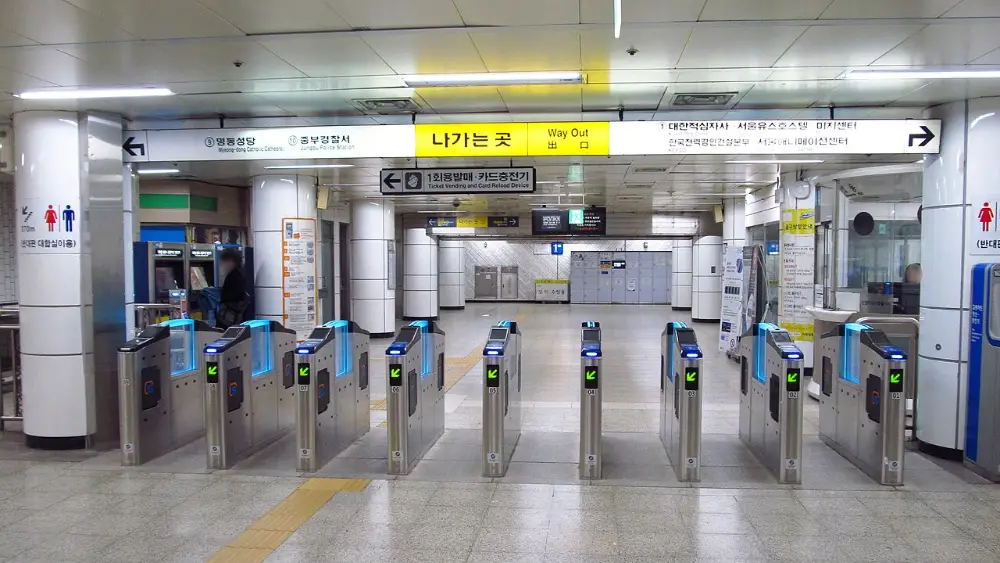
Climate Card if you stay inside Seoul and ride three or more times a day. Plain T-money for everyone else.
Quick answer
- Staying in Seoul, riding a lot: get a Climate Card short-term pass. Three days costs 10,000 won plus a 3,000 won card.
- Day trips outside Seoul, or landing at Incheon: use T-money. It works on more lines and buses than the pass.
- Want one card for shopping and transit: WOWPASS, but you still top up the transit part separately.
- iPhone with Mastercard or Amex: skip the plastic and add T-money to Apple Wallet.
- Subway base fare
- 1,550 won by card (since June 2025)
- Climate Card passes
- 1 day 5,000 · 3 days 10,000 · 7 days 20,000 won
- Card costs
- Climate Card 3,000 won · WOWPASS 5,000 won fee
- Foreign card at gates
- Not yet. Planned from 2027
Every first-timer in Seoul ends up at the same convenience store counter, staring at a rack of cute transit cards and wondering whether they’re about to waste money. You probably aren’t. The difference between these cards is a few thousand won either way. What actually costs you is picking a card that doesn’t work where you’re going, or getting caught by a rule nobody mentioned.
So this guide starts with how you’ll travel, not with the cards.
The short version
If you’re spending three or more days mostly inside Seoul and you ride the subway or bus a few times a day, the Climate Card short-term pass is the cheapest option. If you’re heading out of the city, landing at Incheon, or only riding once or twice a day, a plain T-money card is simpler and usually cheaper. WOWPASS is mainly a currency-exchange and payment card that happens to have T-money inside it.
Not sure which camp you’re in? Our transit card picker asks three questions and does the math for you.
What each card actually is
T-money is the standard rechargeable transit card. You pay for the card once, load won onto it, and each tap deducts the fare. It’s what most locals use, and it works on subways and buses well beyond Seoul. Convenience stores sell plain ones for around 3,000 won, with character designs costing more.
The Climate Card (기후동행카드) is Seoul’s unlimited-ride pass. Tourists can buy short-term passes for 1, 2, 3, 5 or 7 days. You buy the card for 3,000 won, then load a pass onto it. Inside its coverage area you ride as much as you like.
WOWPASS is a prepaid card built for foreigners. You feed foreign cash into a kiosk, it converts to won, and you spend it like a debit card in shops. It also has a separate T-money chip for transit. The catch is that the two balances are separate, so loading money for shopping doesn’t load your transit fare.
The prices, side by side
| T-money | Climate Card pass | WOWPASS | |
|---|---|---|---|
| Card cost | about 3,000 won | 3,000 won | 5,000 won fee |
| How you pay fares | 1,550 won per subway trip, deducted per tap | Unlimited for 1 to 7 days | T-money chip, same as T-money |
| Loading it | Cash at convenience stores and station machines | Station machines (foreign cards OK) or convenience stores | Foreign cash at kiosks; transit part topped up separately |
| Works outside Seoul | Yes, in most major cities | No | Yes (T-money part) |
Climate Card short-term passes cost 5,000 won for 1 day, 8,000 won for 2 days, 10,000 won for 3 days, 15,000 won for 5 days and 20,000 won for 7 days.
When the pass pays for itself
A subway trip in Seoul costs 1,550 won with a card. Transfers within 30 minutes of tapping out count as the same trip, so a subway-to-bus journey is still one fare. Long rides over 10 km add 100 won per extra 5 km.
That gives you rough break-even points:
- 1-day pass (5,000 won): worth it at 4 or more trips that day.
- 3-day pass (10,000 won): worth it at about 3 trips a day.
- 7-day pass (20,000 won): worth it at about 2 trips a day.
Most visitors doing a normal sightseeing day (hotel to a palace, lunch somewhere else, a neighborhood in the afternoon, back to the hotel) hit three or four trips without trying. If you’re staying in one neighborhood and walking a lot, you won’t.
Where the Climate Card doesn’t work
This is where visitors get caught. The pass covers the Seoul subway and Seoul-licensed buses, including village and night buses. It does not cover:
- The Shinbundang Line (the fast line to Pangyo and the south)
- Subway sections and buses outside Seoul, so no Suwon or most of Gyeonggi
- Red express buses and airport limousine buses
- Seoul’s Ttareungyi bike share and the Hangang Bus ferry
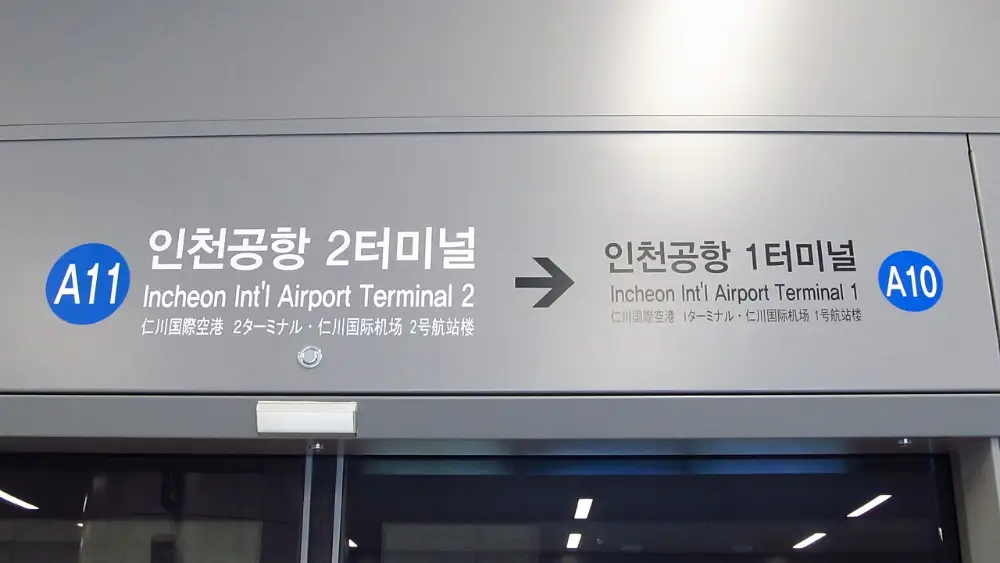
The Airport Railroad is a special case. You can ride it to Incheon Airport on the pass if you board inside the covered area, but you can’t board at the airport with it. In plain terms: the pass gets you to your flight home, not into the city when you land.
Paying with a foreign card
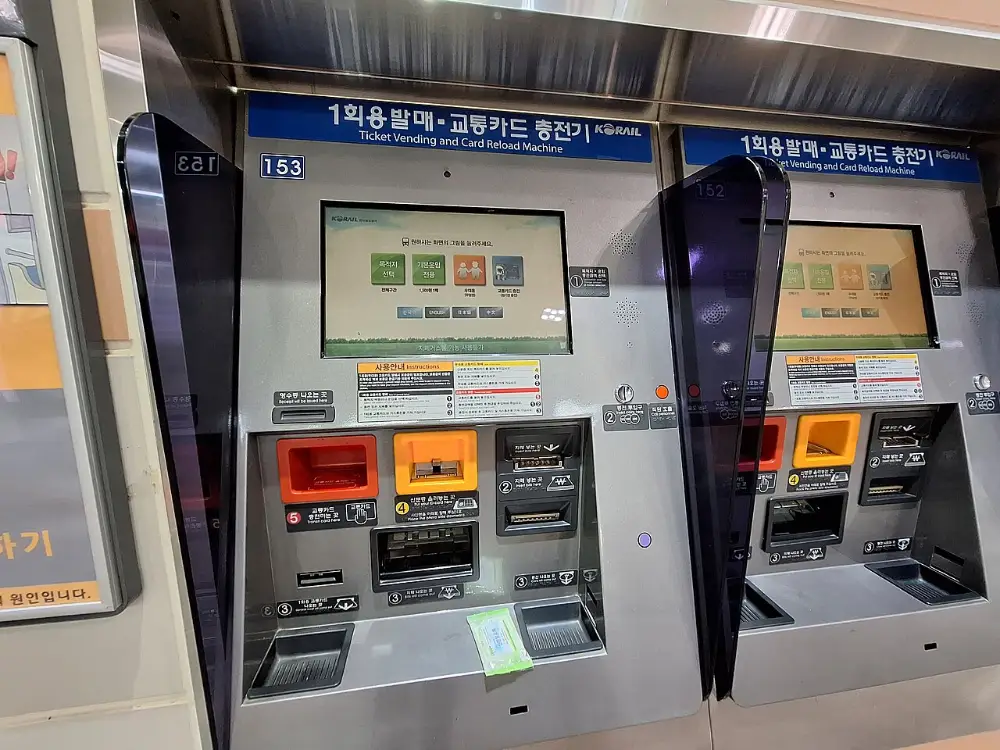
Since March 17, 2026, Seoul has 440 new ticket machines across 273 stations on Lines 1 to 8 that take Visa, Mastercard and other foreign cards. You can use them to buy single tickets and Climate Card passes. Expect a fee of around 3.7% on foreign cards. Paying with won in cash avoids it.
What you still can’t do:
- Tap a foreign Visa or Mastercard at the gates or on buses. (More on cards in our foreign card guide.) Seoul plans to allow this on Lines 1 to 8 from 2027, with buses getting new readers first.
- Top up T-money with a foreign card at those machines. T-money top-ups are still cash only.
If you have an iPhone, there’s a better route. Since March 18, 2026, the Tmoney app lets foreigners sign up, top up with Mastercard, Amex or UnionPay, and add T-money to Apple Wallet. You then tap your phone at the gates with no card at all. Visa wasn’t supported when this launched, so check the app before relying on it.
The rules that cost visitors money
Tap out of buses. On the subway you have to tap out to leave the station anyway. On buses people forget, and a missed tap-out breaks your transfer, so the next ride charges a fresh base fare.
The transfer window doubles at night. You get 30 minutes between rides for a free transfer during the day, and 60 minutes between 9 p.m. and 7 a.m.
One card per person. You can’t tap twice to pay for a friend on the same card and still get transfer discounts. Each traveler needs a card.
Get your T-money balance back before you leave. Refunds cost 500 won. Under 20,000 won you can do it at GS25 or 7-Eleven, under 30,000 won at CU or Emart24, and under 50,000 won at subway station service centers. The card price itself isn’t refunded, so if you’ll be back in Korea, keep it. Any balance left on it stays there for next time.
Passes start when you load them. A Climate Card pass runs from first service on the day you activate it until last service on its final day. Loading a 1-day pass at 9 p.m. gets you three hours of riding.
What we’d do
For a first trip of four or five days in Seoul with a day trip somewhere like Suwon: buy a T-money card at the airport for the ride in and the day trip, then buy a 3-day Climate Card pass for your busiest days in the city. You’ll carry two cards, which sounds annoying, but each one does the job the other can’t.
For a week mostly in Seoul: a 7-day pass works out to under 3,000 won a day and you stop thinking about fares altogether.
For a short trip where you’ll mostly walk, or a trip through several cities: just T-money.
WOWPASS makes sense if you were going to exchange cash anyway and like the idea of a card that also pays in shops. Treat the transit part as a T-money card that lives inside it.
Questions people ask
Can I tap my Visa or Mastercard at Seoul subway gates?
Not yet. Since March 17, 2026 you can use a foreign card at 440 new ticket machines on Lines 1 to 8 to buy single tickets or Climate Card passes, but the gates themselves only take transit cards and phones. Seoul plans open-loop card payments on Lines 1 to 8 from 2027.
Can I use the Climate Card from Incheon Airport?
Not on the way in. The pass lets you ride the Airport Railroad to Incheon Airport if you board inside its coverage area, but you can't board at the airport with it. Use T-money or a single ticket when you land.
Can I still buy the 30-day Climate Card?
No. The 30-day card's last top-up was August 31, 2026. The 1, 2, 3, 5 and 7-day short-term passes are still on sale.
How do I top up T-money?
With Korean won in cash, at convenience stores or the top-up machines in subway stations. The new machines that accept foreign cards sell passes and single tickets but don't top up T-money.
Can I get my leftover T-money back?
Yes, minus a 500 won fee. Balances under 20,000 won can be refunded at GS25 or 7-Eleven, under 30,000 won at CU or Emart24, and under 50,000 won at Seoul subway station service centers. The price of the card itself isn't refunded.
How we checked this
Change log
- First published. Prices and rules checked against Seoul city notices and press reports. Added photos.
Sources
- Seoul Metropolitan Government: public transport fares (2025-07-11)
- Seoul Metropolitan Government: transfer discount rules (2026-02-02)
- Seoul Metropolitan Government: Climate Card short-term passes (2026-10-01)
- Korea JoongAng Daily: tourists can now use overseas cards to buy subway tickets in Seoul (2026-03-16)
- Korea JoongAng Daily: Apple Pay Tmoney allows foreigners and tourists to ride using iPhones (2026-03-19)
- Korea Herald: 30-day Climate Card to end (2026-07-30)
- Korea JoongAng Daily: Seoul subway fares to rise by 150 won from June 28 (2025-04-29)
- WOWPASS official FAQ (checked 2026-10-09)
Spotted something out of date? Tell us and we'll re-check it.
Read or use next
-
 Paying in Korea with a foreign card in 2026: what works and what doesn't
Your card will work at most counters. It's the apps, kiosks and booking sites that catch visitors out, and that's where you need a plan.
Paying in Korea with a foreign card in 2026: what works and what doesn't
Your card will work at most counters. It's the apps, kiosks and booking sites that catch visitors out, and that's where you need a plan.
- Korea transit card pickerFour questions, then the cheapest card for how you'll actually travel.
- Korea trip checklistA tick-box list that remembers your progress on this device.
-
 3 days in Seoul for first-timers: a realistic itinerary
Three days is enough for Seoul's highlights if you stop crossing the city twice a day. Group by neighborhood and the subway time mostly disappears.
3 days in Seoul for first-timers: a realistic itinerary
Three days is enough for Seoul's highlights if you stop crossing the city twice a day. Group by neighborhood and the subway time mostly disappears.