Buying glasses in Seoul as a tourist: prices, the eye test and same-day pickup
Seoul's opticians test your eyes, cut the lenses in the shop and hand you the glasses the same day. What it costs in 2026, what the test is and isn't, and the lenses that need a second visit.
Updated Added a first-hand note from our editor, Leo. See all changes
Quick answer
- Yes, walk in: Seoul opticians do a short vision test, usually free, and make standard single-vision glasses in the shop, often in 15 minutes to an hour.
- Cost in 2026: cheap frames start around 10,000 to 30,000 won and basic lenses around 25,000 won, so a simple pair can come in under 50,000 won (about $38). Thin or special lenses cost more.
- Not always same day: depending on lens type and prescription, thinner, tinted or progressive lenses may have to be ordered, which usually means picking up the next day or two.
- Contact lenses: buy them in person at an optician. Korean law bans selling contact lenses online.
- Vision test
- Usually free
- Standard pair ready
- 15 to 60 minutes
- Basic lenses
- From about 25,000 won
- Special lenses
- Often next day
We may earn a commission if you book through links here, at no extra cost to you. It doesn't change our verdicts. How we make money
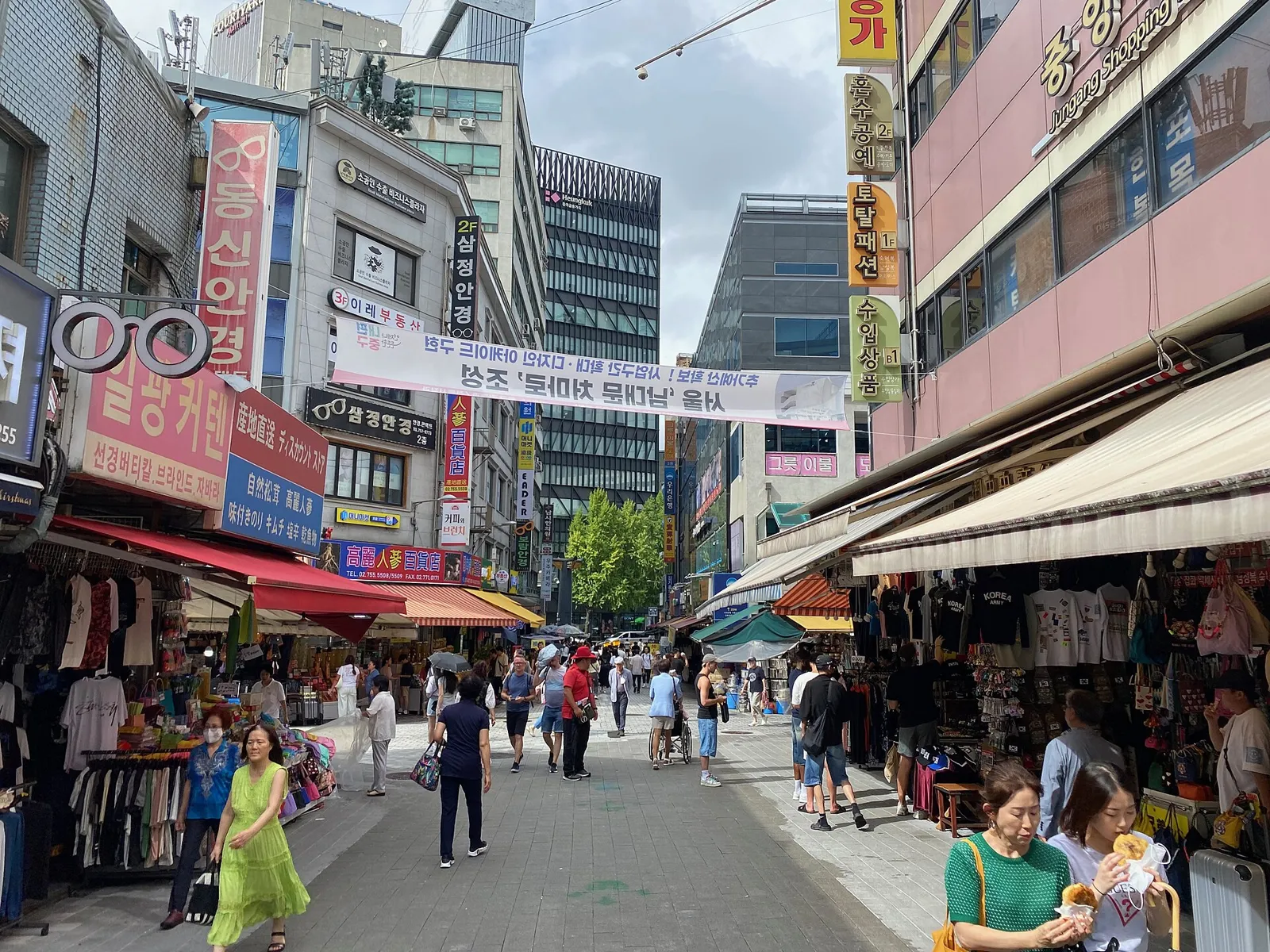
Your glasses snapped on the flight, or you’ve read that Seoul makes a pair in half an hour for a fraction of what you pay at home and you want to try it. Both work. You can walk into an optician in Myeongdong or Namdaemun without an appointment, get your eyes measured and walk out wearing new glasses, as long as your lenses are ones the shop keeps in stock.
The short version
Go to an optician (안경원, angyeongwon) in a tourist area, ask for an eye test, pick a frame and pay. The test is usually free and takes about 10 minutes. Standard single-vision lenses are cut in the shop, so the glasses are often ready in 15 minutes to an hour.
As of November 2026, cheap frames start around 10,000 to 30,000 won and basic lenses around 25,000 won, so a simple pair can cost under 50,000 won (about $38). Brand frames, thin lenses and coatings push it to 100,000 won and up. Depending on the lens type and your prescription, thin, tinted or progressive lenses may need ordering, which means coming back the next day, so don’t leave it to your last afternoon.
What it costs and how long it takes
These are reported prices and times from late 2025 and 2026, not a price list. Each shop sets its own, and most post fixed prices on the frames.
| Item | Typical price or time (2026) | Reported by |
|---|---|---|
| Vision test | Free at the shops in these reports (ask before the test) | November 2026 receipt; shop listings on Creatrip |
| Budget frames | From 10,000 won (about $7.50) | Myeongdong underground shop, November 2026 |
| Cheap frames, elsewhere | Around 30,000 won | Asia Economy, May 2026 |
| Korean brand glasses (Blue Elephant) | 50,000 won range | KB Securities analyst in Korea JoongAng Daily, October 2026 |
| Basic lenses | From 25,000 won | November 2026 receipt |
| Super-thin lenses | 100,000 won and up | November 2026 receipt |
| “A decent pair” | Around 100,000 to 150,000 won | Creatrip shop guide, 2026 |
| Standard pair, ready | 15 minutes to an hour | November 2026 receipt (15 minutes); Korea JoongAng Daily (within 30 minutes); Korea Times (30 minutes to an hour) |
| Ordered lenses | Usually within a day or two | Korea JoongAng Daily |
Travel blogger Kylie of Between England and Iowa posted her receipt from a Myeongdong underground shop in November 2026: 35,000 won for a pair of glasses and 70,000 won for prescription sunglasses, with a free test of under 10 minutes. The glasses would have been ready in about 15 minutes; the sunglasses lenses were made off-site and ready the next day. She also notes the cheapest frames felt cheap.
It’s popular enough to show up in the numbers. Korea Tourism Organization card data, reported by Seoul Economic Daily, show foreign visitors’ card spending at optical shops up 55.1% in January to August 2026 against a year earlier.
How a visit works
- Walk in and ask for an eye test. Walk-ins are normal in Myeongdong and Namdaemun. Tourist-area shops such as Davich in Myeongdong say their staff generally speak English, with pamphlets and signs in English, Chinese and Japanese.
- The test. Usually an autorefractor (you look at a picture inside a machine) and then a chart, about 10 minutes in total. Show your old prescription if you have it; it gives the optician a starting point.
- Pick a frame. Prices are usually on the frame. Ask what the lens price is for your numbers before you commit, because the thinner lenses a strong prescription needs cost more.
- Pay. Expect to pay before the lenses are cut, as the shop in the receipt above asked. It took overseas Visa and Mastercard; our foreign card guide covers what to do if yours is declined.
- Pick up and adjust. Try them on, check reading distance and walking, and ask for the arms or nose pads to be adjusted before you leave.
Before you go, take a photo of your current prescription, or ask your optician at home for a copy. It’s your check against the new numbers, and it’s easier to show on your phone than to explain in Korean.
Leo’s note: Prices and how long glasses take vary by shop and lens, so it was worth asking first. Bring your prescription and check that the lens you want is in stock; it saves time.
What the eye test is, and what it isn’t
A Seoul optician’s test finds the lens numbers for your glasses. It is not a medical eye exam. Korean law spells out what opticians may test, and tests that use eye drops are a doctor’s job; in November 2025 doctors’ and opticians’ groups were still arguing in the National Assembly over a bill to write the optician’s refraction test into the law itself, Dailymedi reported.
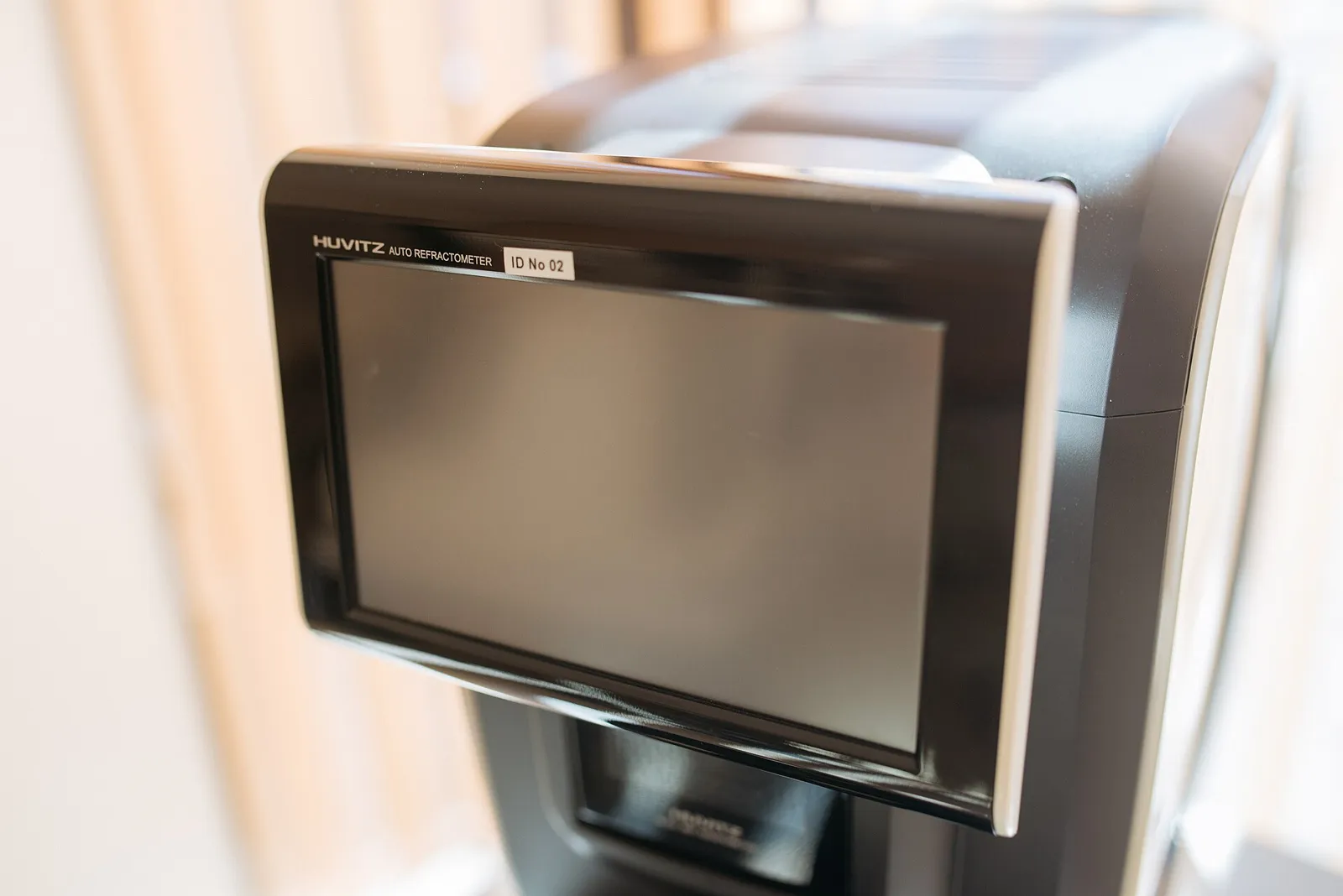
In practice that means: if your eyes hurt, your vision changed suddenly, or you see flashes or floaters, go to an eye clinic (안과, angwa) instead of an optician. The same goes for a child’s first glasses. Our hospitals and pharmacies guide explains how to find a clinic that sees foreigners and what a visit costs without Korean insurance.
Where to go in Seoul
Myeongdong has the most shops used to visitors, with English signs and staff. A staff member at Davich Optical’s Myeongdong branch told Korea JoongAng Daily in October 2026 that 60 to 70% of its customers are foreigners, varying by month.
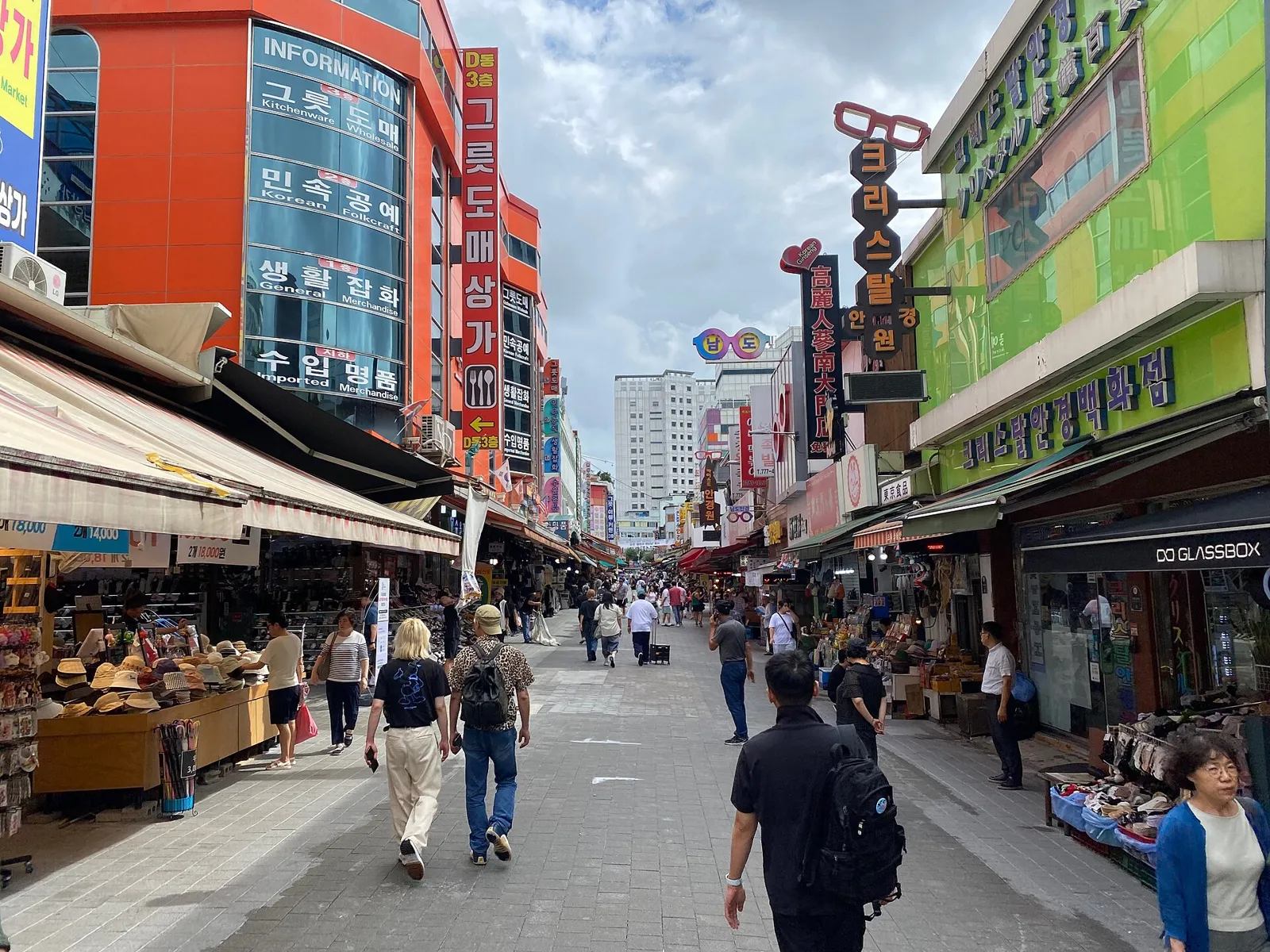
Namdaemun Market, close to Myeongdong, has an eyewear street with about 150 optical shops and wholesalers, according to the same report. It’s the place to compare frame prices across several shops in one walk.
Hongdae, Seongsu and Gangnam have chain branches too: Optic Life has shops in all three, and Manomos has stores in Seongsu and at Konkuk University. The booking app Creatrip sells discount vouchers for some of these chains (10% at Davich Myeongdong when we checked in November 2026); a voucher only matters if you’d buy there anyway.
If your lenses need ordering, you’ll be back the next day or the one after, so it helps to sleep within easy reach. Staying in Myeongdong or near Seoul Station keeps both shopping areas close; our where to stay in Seoul guide compares the areas.
Contact lenses and the tax refund
Contact lenses are sold only in person in Korea. Article 12(5) of the Medical Technicians Act bans selling them online, and the Constitutional Court upheld the ban, the government’s policy briefing site noted in April 2024. A February 2026 Hankyung report still describes the rule the same way: you buy contacts at an optician or an offline store, even if an app lets you reserve them for pickup (prosecutors have so far treated that in-store pickup as legal). Bring the box or your contact lens prescription (brand, power and base curve), because it isn’t the same as a glasses prescription.
Tax refund. If the shop shows a Tax Free or Tax Refund sign, show your passport at the register. Our tax refund guide has the minimum spend, the limits and the airport steps.
Mistakes that catch visitors out
Leaving it to the last day. Anything beyond basic single-vision lenses may need a next-day pickup. Go early in the trip.
Not getting your numbers. Ask for the prescription the shop measured, written down, before you leave. You’ll want it for your next pair at home.
Treating it as a health check. The free test sets your lens power. It won’t catch eye disease.
Buying the cheapest frame for daily wear. Very cheap frames can feel flimsy. Spend a bit more on the pair you’ll wear every day, and go budget for a spare or sunglasses.
Ordering contacts online. It’s illegal for sellers in Korea, so buy them at an optician.
What we’d do
Simple single-vision prescription, short trip: Walk into a Myeongdong or Namdaemun optician on your first or second day, compare two or three shops’ frame prices, and wear the new pair out of the shop.
Progressives, thin lenses or a complicated prescription: Go on day one, ask straight away whether your lenses are in stock, and plan a second visit the next day. Bring your current prescription.
Eye pain, sudden changes or a child’s first glasses: Book an eye clinic (안과) through our hospitals guide first, then take its prescription to an optician.
You only want contacts: Bring your contact lens prescription and buy them in person at an optician, not online.
Questions people ask
Can tourists buy prescription glasses in Korea?
Yes. You don't need a Korean prescription, because the optician tests your vision in the shop, you pick a frame and pay, and standard lenses are usually cut and fitted while you wait.
Do I need to bring my prescription?
It isn't required, because the optician measures your eyes, but bring it if you have it. Your old prescription gives the optician a starting point and helps if the new numbers look very different.
How long does it take to get glasses in Seoul?
For a standard single-vision prescription, often 15 minutes to an hour. Lenses the shop doesn't stock, such as some thin, tinted or progressive lenses, are ordered from the maker and usually arrive within a day or two.
Is the eye test free at Korean opticians?
It was free at the shops in the 2026 reports we used, but ask before the test. It is a vision check to find your lens numbers, not a medical eye exam, so see an eye clinic if you have pain, sudden changes or other symptoms.
Can I buy contact lenses online in Korea?
No. Korea's Medical Technicians Act bans selling contact lenses online, so you buy them in person at an optician, even when an app lets you reserve them for pickup.
How we checked this
Change log
- Added a first-hand note from our editor, Leo.
- First published.
Sources 11 in all, 2 official
2 of 11 from official sources. Official means the government or the operator itself, Press a news report, Other a guide, blog or reference site we used for context.
- Official Korea.kr (Ministry of Science and ICT): contact lens online sales ban under Article 12(5) of the Medical Technicians Act upheld (2024-04-03)
- Press Seoul Economic Daily: foreign tourists flock to Korean optical shops (Korea Tourism Organization card data) (2026-10-21)
- Press Seoul Economic Daily (Korean): foreigners turn to K-glasses after Olive Young, Daiso and pharmacies (2026-10-20)
- Press Korea JoongAng Daily: Glasses in a flash, why tourists are flocking to Korea for fast, affordable eyewear (2026-10-17)
- Press Korea Times: 'K-glasses' boom, more foreign tourists flock to local opticians (2025-12-02)
- Press Asia Economy (Korean): glasses in 30 minutes, the thing visitors are told to do in Korea (2026-05-10)
- Press Hankyung (Korean): contact lenses can't be bought online and must be bought at an optician, online pickup service avoids charges (2026-02-20)
- Other Dailymedi (Korean): doctors and opticians clash over refraction testing in the Medical Technicians Act (2025-11-20)
- Other Between England and Iowa: buying prescription glasses in Seoul as a tourist (blogger's receipt and timings) (2026-11-18)
- Other Creatrip: where to get prescription glasses in Seoul (shops, free exams, booking vouchers) (checked 2026-11-19)
- Official Banque de France: euro reference rates, 26 October 2026 (used for won to dollar) (2026-10-26)
Spotted something out of date? Tell us and we'll re-check it.
Part of our Planning a first trip to Korea topic guide.
Read or use next
-
 Paying in Korea with a foreign card in 2026: what works and what doesn't
Your card will work at most counters. It's the apps, kiosks and booking sites that catch visitors out, and that's where you need a plan.
-
 K-ETA in 2026 and 2027: who needs it and how to apply
Twenty-two countries can skip it until the end of 2027, after a one-year extension announced on November 23, 2026. Everyone else applies on the official site for 10,000 won.
-
 Korean pharmacies for tourists: what you can buy without a prescription, and how to ask
Pharmacies in Korea sell everyday medicine over the counter and a shelf of skincare that has turned Myeongdong into a shopping stop. Antibiotic tablets and stronger medicine still need a doctor first.
-
 Dentist in Seoul for foreigners: a toothache today vs planned work
A cracked tooth on day two and a planned whitening session are different problems. One needs whoever is open tonight, the other needs a week of comparing clinics. Here's how to handle both.