Eating alone in Korea: where you'll be welcome and where you won't
Most of Korea feeds solo diners without blinking. The exceptions are predictable, and knowing them saves you an awkward walk back out the door.
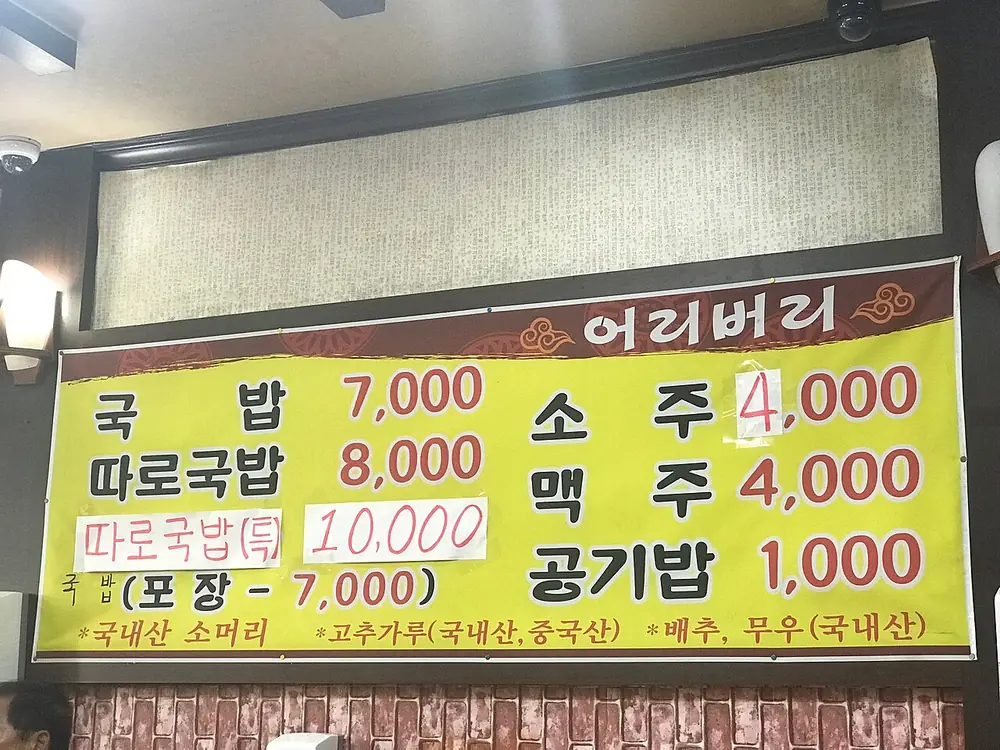
Easy for everyday Korean food, awkward for barbecue and group-style dishes, and occasionally a flat no at busy lunch hours.
Quick answer
- Usually fine: soup and rice places, kimbap shops, noodle shops, food courts, convenience stores and kiosk-order restaurants all expect people eating alone.
- Often awkward: Korean barbecue and shared stews are portioned for two or more, so you may need to order and pay for two servings.
- Sometimes refused: some restaurants turn away solo diners, especially at peak lunch hours. It's legal, and it isn't about you being foreign.
- Ask before you sit: hold up one finger and ask if one person is OK. Our phrase cards have the Korean.
- Single-person households
- About 42% of households (2025)
- Restaurants with solo menus
- About 10.4% (March 2025)
- Refusing solo diners
- Legal; owner's discretion
- Barbecue minimum
- Often 2 portions per table
You land in Seoul, you’re hungry, and you’re on your own. You’ve seen the barbecue videos and the bubbling stews in the middle of the table, and you’ve also seen the headlines about restaurants that won’t seat a single customer. So you hover outside a place full of groups and wonder whether walking in alone will get you a table or an apology.
Most of the time you’ll be fine. Korea has more people eating alone than ever, and a whole category of restaurants is built around them. But a few formats really are designed for two or more, and some owners still say no. Knowing which is which takes the guesswork out of it.
The short version
Everyday Korean food is easy alone: soup and rice, kimbap, noodles, food courts, convenience stores, and any place where you order from a kiosk. Korean barbecue and shared stews are the hard part, because portions are sized for two and many places expect you to order two servings. A small number of restaurants refuse solo diners outright, usually at peak hours. It’s legal, it’s widely criticized in Korea, and it’s not aimed at foreigners.
If you only remember one thing: ask at the door before you sit. Hold up one finger. You’ll get a clear yes or no in seconds.
Why this is even a question
Korean restaurant culture grew up around sharing. A table orders a pot of stew or a few portions of pork and everyone eats from the middle. That works beautifully for groups and awkwardly for one.
At the same time, Korea now has more single people than ever. Single-person households passed 10 million in late August 2025, about 42% of all households, according to Ministry of the Interior and Safety figures reported by Korea JoongAng Daily. Statistics Korea’s 2024 time-use survey found 26.9% of people eat lunch alone and 25.7% eat dinner alone. Younger Koreans have a word for it, honbap (혼밥, literally “alone-rice”), and for most people in their 20s and 30s it carries little stigma.
Restaurants are catching up, slowly. About 10.4% of roughly 170,000 restaurants offered single-person meals as of March 2025, up from 9.7% a year earlier, according to Nice Zini Data. That’s growth, but it also means most restaurants still don’t have a menu designed for one.
The refusals, and what they actually mean
In November 2025, a photo of a handwritten sign outside a Chinese restaurant went viral in Korea. It gave solo diners four options: pay for two portions, eat two portions, bring a friend, or “come back with your wife next time.” It ended with “We don’t sell loneliness. Please don’t come alone.” The post was viewed more than 300,000 times, and most commenters called the owner’s attitude outdated, though some defended an owner’s right to set rules, as the Korea Times reported.
It wasn’t a one-off. In July 2025 a travel YouTuber eating alone at a well-known restaurant in Yeosu said staff told her to eat quickly because more people were coming. The Yeosu city government apologized and promised guidelines for serving solo diners. In May 2026 a CNN Travel journalist wrote that he was turned away twice in Seoul for being alone.
A few things worth knowing:
- It’s legal. The Fair Trade Commission treats refusing solo diners as the owner’s discretion, and there’s no penalty for it or for requiring two servings.
- It’s about table turnover, not you. The Korea Foodservice Industry Association says owners try to fill four-person tables during peak hours to cover rising food, labor and rent costs. One solo diner at a four-top halves the sales of that table.
- Excuses happen. Reported cases include a gukbap restaurant saying it was out of ingredients, and a diner told “no solo customers” while tables sat empty. If you get a vague no, take it as a no and move on.
Where you’ll be welcome
These formats are built for people eating alone, or at least don’t care:
| Format | What it is | Why it works solo |
|---|---|---|
| Gukbap (국밥) | Rice in a hot soup, often pork, beef or blood sausage | One bowl per person by design. A bowl now runs about 10,000 won in Seoul. |
| Kimbap and snack chains (분식) | Kimbap, ramyeon, tteokbokki, cutlet | Single plates, fast turnover. A kimbap roll averaged 3,800 won in Seoul in April 2026. |
| Noodle shops | Kalguksu, naengmyeon, udon | One bowl, one person. |
| Food courts | Department store basements, malls, big stations | Order at a counter, sit anywhere. |
| Convenience stores | Lunch boxes, triangle kimbap, cup noodles | Counters with stools and hot water. |
| Kiosk restaurants | Order on a screen at the door | No conversation about party size at all. |
| Bar-seat restaurants | Ramen shops and newer solo-friendly places | Counter seats mean you don’t take a four-top. |
Some barbecue restaurants now offer single servings too, and Korea JoongAng Daily reported franchises selling one-person pizzas and chicken. They’re still the minority.
Business districts such as Gangnam and Jongno have more solo-friendly places, and Korean map apps have been adding ways to search for them. Our guide to using Naver Map in English covers the basics of finding restaurants near you.
Where it gets awkward
Korean barbecue. This is the big one. A Yongin barbecue owner quoted by Korea JoongAng Daily put it plainly: portions for main items are designed for two or more people, and solo diners are welcome if they pay for the extra portion. Many menus say “2인분 이상” (two portions or more). With a 200g portion of pork belly averaging 21,321 won in Seoul in April 2026, that’s over 40,000 won for one person before rice or drinks.
Shared stews and hot pots. Dakgalbi, budae jjigae, jjim and many seafood stews come in a pot for the table. Single-serving stews like kimchi jjigae set meals are often fine; the big shared pots usually aren’t.
Peak lunch hour. Around noon to 1 p.m. near offices, small restaurants with a handful of tables are the most likely to turn you away. The same place may happily seat you at 2 p.m.
Famous places with queues. Restaurants with a line out the door have the least reason to give you a four-person table. Some will seat you at a shared counter; some won’t.
The mistakes that catch visitors out
Sitting down before asking. In Korea, staff often seat you or point you to a table. If you walk in and sit at a big table during a rush, you’re setting up an awkward moment. Ask first.
Assuming “two portions” is negotiable. If the menu says two portions minimum, that’s the price of the table. You can usually take leftovers home, so ask for packing (포장, pojang).
Reading a no as discrimination against foreigners. Korean solo diners get the same answer, and most of the cases that drive this debate in Korea involve Korean customers.
Giving up on Korean food entirely. Solo travelers sometimes default to burgers and convenience stores out of caution. You don’t need to. A gukbap or noodle shop will feed you better for about the same money, and our piece on what things really cost in Korea has the averages.
How to ask
You don’t need much Korean. Hold up one finger when staff look at you, and say one of these:
- Honja-yo (혼자요): “Just me.”
- Han myeong-iyo (한 명이요): “One person.”
- Il-inbun dwaeyo? (1인분 돼요?): “Can I order a single portion?”
If the answer is “an dwaeyo” (안 돼요), that’s a no. Thank them and leave; there’s another restaurant three doors down. Our phrase cards have these lines in large Korean text you can show on your phone.
What we’d do
First-time solo traveler: Eat breakfast from a convenience store or bakery, lunch at a gukbap, noodle or kimbap shop, and save the sit-down dinner for after 7:30 p.m., when the early rush has passed. You’ll eat well without a single awkward moment.
Barbecue on your list: Look for places that list a one-person set (1인 세트) or single servings, or accept that you’ll pay for two portions and take the rest away. Going mid-afternoon helps.
Short trip, want the classics: Department store food halls and big station food courts let you try several dishes in one place with no table politics.
Traveling with one other person part of the time: Save barbecue, dakgalbi and big stews for those meals. Keep the solo days for soups, noodles and kimbap. If you’re putting together a first trip, our 3-day Seoul plan leaves room for both.
Questions people ask
Is it rude to eat alone in Korea?
No. Eating alone is common, especially among people in their 20s and 30s, and there's a word for it, honbap. What can be awkward is sitting alone at a four-person table during a busy lunch rush.
Can I eat Korean barbecue by myself?
Sometimes. Many barbecue restaurants size their portions for two or more and ask solo diners to pay for a second serving. A growing number offer single servings, so ask at the door before you sit down.
Can a restaurant legally refuse to serve me because I'm alone?
Yes. Korea's Fair Trade Commission treats it as the owner's discretion rather than a fair trade violation, and there's no penalty under current law for refusing solo diners or requiring two servings.
What is honbap?
Honbap (혼밥) is short for eating a meal alone. It became a common, mostly stigma-free word among younger Koreans over the past decade.
What time is best to eat alone in Korea?
Outside the noon to 1 p.m. office lunch rush and the early-evening dinner peak. Restaurants that turn away solo diners usually do it because they want to fill tables during those hours.
How we checked this
Change log
- First published.
Sources
- Korea Times: restaurant's ban on solo diners sparks debate online in Korea (2025-11-15)
- Korea JoongAng Daily: 'We don't sell loneliness': restaurant faces backlash for rejecting solo diners (2025-11-12)
- Korea JoongAng Daily: solo diners are on the rise, but restaurants still say 'no soup for you' (2025-09-10)
- Korea JoongAng Daily: solo dining means 'freedom' for young Koreans (2025-04-29)
- Financial News: solo customers turned away as single-serving menus grow (2025-09-21)
- Asia Business Daily: CNN reporter denied solo dining twice in Seoul (2026-05-08)
- Digital Times: CNN reports being refused as a solo diner in Korea (2026-05-08)
- Korea JoongAng Daily: lunchflation puts the squeeze on Seoul restaurateurs (2026-06-09)
Spotted something out of date? Tell us and we'll re-check it.
Read or use next
- Show-on-your-phone Korean phrase cardsTap a phrase and it fills your screen, ready to show.
-
 Is Korea expensive? Real daily costs in 2026
Getting around and eating simply is cheap. Barbecue, cafes and taxis are where the money goes, and they add up faster than you'd think.
Is Korea expensive? Real daily costs in 2026
Getting around and eating simply is cheap. Barbecue, cafes and taxis are where the money goes, and they add up faster than you'd think.
-
 3 days in Seoul for first-timers: a realistic itinerary
Three days is enough for Seoul's highlights if you stop crossing the city twice a day. Group by neighborhood and the subway time mostly disappears.
3 days in Seoul for first-timers: a realistic itinerary
Three days is enough for Seoul's highlights if you stop crossing the city twice a day. Group by neighborhood and the subway time mostly disappears.
-
 Is Nami Island worth it? An honest look
A pretty, well-run river island that gets very crowded. Worth it in the right season and mood, skippable if you came for wilderness or a Winter Sonata time capsule.
Is Nami Island worth it? An honest look
A pretty, well-run river island that gets very crowded. Worth it in the right season and mood, skippable if you came for wilderness or a Winter Sonata time capsule.