Exchanging money for Korea: home, airport, Myeongdong or ATM?
You need less cash in Korea than you think, and where you change it matters more than how. A short guide to getting won without overpaying.
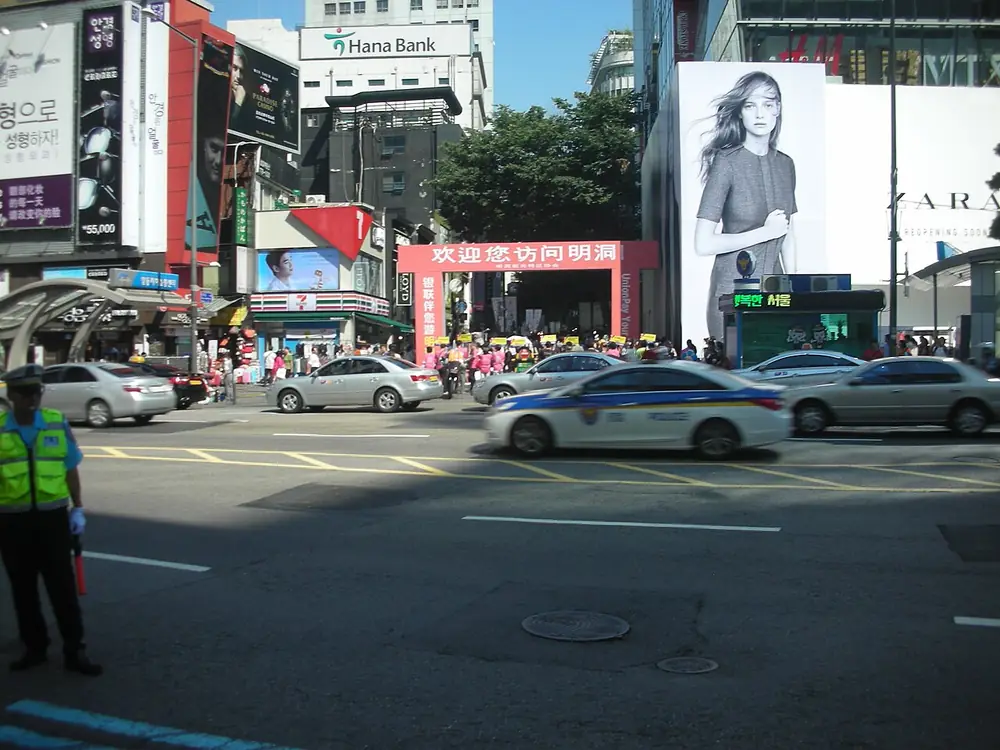
Change only a little at the airport if you need it, get the rest in the city or from an ATM, and pay by card wherever you can.
Quick answer
- Best rates for cash: the private money changers in Myeongdong and other tourist areas usually beat the airport.
- At the airport: exchange only what you need for the first day or two. Airport booths have high costs and price their rates accordingly.
- ATMs: work with many foreign cards, but not every machine accepts them. If the screen offers your home currency, choose won (KRW).
- Prepaid cards: WOWPASS takes foreign cash at its kiosks and works like a debit card. It charges 1,000 won per ATM withdrawal.
- How much cash: not much. Cards work at almost every counter, so cash is mainly for T-money top-ups and some market stalls.
- Best cash rates
- City money changers, not the airport
- WOWPASS withdrawal
- 1,000 won each, up to 100,000 won
- Machine asks currency
- Always choose KRW
- Declare cash on arrival
- Over US$10,000
Somewhere before every trip to Korea comes the same small worry: how much won to get, and where, without losing a chunk of it to a bad rate. The honest answer is that you need less cash than you think. Korea runs on cards. But you will need some won, and the gap between the worst and best places to get it is real enough to plan around.
The short version
Don’t change a big sum at the airport. Get a small amount there only if you need it for the trip into the city, then change the rest at a private money changer in Myeongdong or another tourist area, or withdraw won from an ATM. Pay by card for almost everything else. If you’d like a prepaid card instead of a wallet full of notes, WOWPASS converts foreign cash at its own kiosks.
And keep it modest. In Korea, cash is mostly for topping up a T-money transit card, some street food and market stalls, and backup for the moment a card gets declined.
Your options compared
| Option | Verdict | Rate | Convenience | Best for |
|---|---|---|---|---|
| Bank at home | 케바케 Depends | Often poor for won, and not always in stock | Done before you fly | A small amount for arrival day, if your bank offers a fair rate |
| Airport exchange booth | 비추 Skip it | Worse than downtown | Open when you land | Just enough for the ride into Seoul |
| City money changer (Myeongdong etc.) | 강추 Worth it | Usually the best for cash | Busy, shorter hours than the airport | Changing most of your cash |
| Korean bank branch | 케바케 Depends | Fair | Weekday hours, can be slow | People near a branch with time to spare |
| ATM with foreign card | 케바케 Depends | Your bank’s rate, plus fees | Everywhere, but not every machine takes foreign cards | Travelers with a low-fee debit card |
| WOWPASS kiosk | 케바케 Depends | Set by WOWPASS | Kiosks in hotels and stations | People who want a prepaid card instead of notes |
Airport versus the city
Airport exchange booths cost more for a structural reason. When Korea JoongAng Daily compared rates, the banks running booths at Incheon Airport pointed to high airport rent, round-the-clock operation and the risk of trading while currency markets are closed. On the day it checked, airport booths gave noticeably fewer won per dollar than downtown counters. That was years ago, but the reasons haven’t gone away.
Downtown, the private money changers around Myeongdong station are where many visitors go. They compete with each other on the rate they post in the window, and when the dollar was strong in late 2025, Financial News reported queues outside the offices near Myeongdong station, with one operator saying local offices pay at least 5 won more per dollar. The difference per dollar sounds small. On a few hundred dollars it adds up to a meal.
Practical tips for money changers:
- Compare two or three windows. They’re often on the same block.
- Bring clean, undamaged notes. Torn or marked notes can be refused.
- Bring your passport. You may be asked for it.
- Count the won at the counter before you walk away.
Korean bank branches also exchange currency, usually at fair rates, but they keep weekday office hours and you may wait for a number to be called. Unless you’re already next to one, a money changer is quicker.
ATMs and your own card
Withdrawing won from an ATM with your home debit card is often the simplest route, especially if your bank charges low or no foreign fees. Not every Korean ATM accepts foreign cards, though. Machines that do usually show a foreign-card or global option on the first screen. If one machine refuses your card, try another bank’s ATM rather than assuming your card is blocked.
Two things to watch:
- Fees stack. The ATM operator may charge a fee, and your own bank may add its own. Taking out a larger amount less often keeps the per-withdrawal fees down.
- Choose won (KRW) when asked. If the ATM or a card terminal offers to charge you in your home currency, decline and choose KRW. Converting at the machine (called dynamic currency conversion) almost always costs more than letting your own bank do it.
The same KRW rule applies whenever you pay by card in shops and restaurants. For everything else about cards, see our guide to paying in Korea with a foreign card.
WOWPASS and other prepaid travel cards
WOWPASS is a prepaid card made for visitors. You feed foreign cash into one of its kiosks (in hotels, subway stations and other spots), the money is converted to won on the card, and you pay with it like a debit card. Its site says cash top-up supports 16 currencies. Card registration costs 5,000 won, and cash withdrawals from the card cost 1,000 won each, up to 100,000 won per withdrawal. It also has a T-money chip for transit, but that balance is separate, so loading money for shopping doesn’t pay your subway fare. Our transit card comparison explains how that works.
WOWPASS is no longer the only option. Since May 2026, Woori Bank has offered a prepaid card for tourists called NOL World, which you can pick up at Incheon Airport on arrival and load or withdraw from at Woori branches, ATMs and unmanned exchange machines. Convenience store chain Emart24 also sells a prepaid tourist card at some of its digital ATMs that converts 15 foreign currencies. Fees and terms differ, so read them before loading a large amount.
A prepaid card makes sense if you were going to exchange cash anyway. If you already have a low-fee card from home, it mostly adds a step.
Rules and mistakes that catch visitors out
Declaring large amounts. If you arrive carrying more than US$10,000 in foreign or Korean currency, you must declare it to customs. Non-residents leaving with more than that need permission unless they declared it on arrival.
Exchanging everything at the airport. It’s the most common way visitors lose money on exchange, and it’s easy to avoid.
Paying in your home currency. Whether it’s an ATM, a hotel desk or a shop terminal, choose won.
Trying to top up T-money by card. T-money top-ups at convenience stores and station machines are still cash only. Keep some 10,000 won notes for this.
Carrying more cash than you need. Leftover won is awkward to spend on the way home, and you’ll lose on the rate changing it back. Change in smaller batches.
Tipping with spare cash. You don’t need to. Tipping isn’t expected in Korea.
How much cash to carry
There’s no official number, and it depends on your habits. As a rough guide, most visitors only need enough won to cover transit top-ups, a few market or street-food meals, and a backup for a day or two in case a card fails. Everything else (hotels, restaurants, convenience stores, cafes, most taxis) takes cards.
If you’re unsure whether Korea will eat through your budget, our honest take on costs breaks down what things actually cost.
What we’d do
First trip, normal card user: change a small amount at the airport only if you need it to get into the city, then visit a Myeongdong money changer for the rest, or use an ATM if your bank has low foreign fees. Pay by card everywhere else.
Travelers from cash-heavy countries: bring clean notes from home and change them in the city. WOWPASS or another prepaid card is worth it if you’d like to pay by card without using your home bank card.
Short stopover or layover: skip exchange entirely if you can. Use your card, and withdraw a small amount from an ATM only if you need T-money.
Everyone: two cards on different networks, a little won in your pocket, and KRW every time a machine asks.
Questions people ask
Is it better to exchange money in Korea or at home?
Usually in Korea, at a city money changer. Won isn't always stocked at home, and rates for it abroad are often poor. If your home bank offers a good rate, a small amount for arrival day is fine.
Are airport exchange rates in Korea bad?
They're worse than downtown. Banks running Incheon Airport booths have cited high rent and round-the-clock staffing as the reason. Exchange enough for transport and a meal, then do the rest in the city.
Can I use my foreign card at Korean ATMs?
At many, yes, but not all. Look for a machine with a foreign-card or global option on the first screen, expect a fee from the ATM operator plus your own bank's charges, and choose won if asked which currency to use.
How much cash should I bring to Korea?
Less than you'd think. Cards work at almost every counter, so cash is mostly for topping up T-money, some street food and market stalls, and backup if a card fails.
Do I have to declare cash when entering Korea?
Yes, if you carry more than US$10,000 in foreign or Korean currency. Declare it to customs on arrival.
How we checked this
Change log
- First published.
Sources
- Financial News: strong dollar draws long lines at Myeongdong money changers (2025-11-24)
- Korea JoongAng Daily: airport exchange rates high? Yep (2014-01-27)
- WOWPASS: official site (checked 2026-10-09)
- Herald Economy: Woori Bank launches NOL World prepaid card for foreign tourists (2026-05-12)
- Sat Economy: Emart24 adds prepaid card issuance and top-ups for foreign tourists (2025-01-16)
- Ministry of Foreign Affairs (Consulate General in Montreal): customs and currency declaration (checked 2026-10-09)
Spotted something out of date? Tell us and we'll re-check it.
Read or use next
-
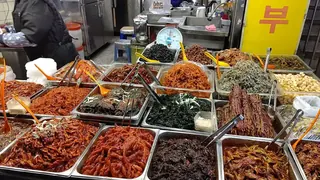 Paying in Korea with a foreign card in 2026: what works and what doesn't
Your card will work at most counters. It's the apps, kiosks and booking sites that catch visitors out, and that's where you need a plan.
Paying in Korea with a foreign card in 2026: what works and what doesn't
Your card will work at most counters. It's the apps, kiosks and booking sites that catch visitors out, and that's where you need a plan.
-
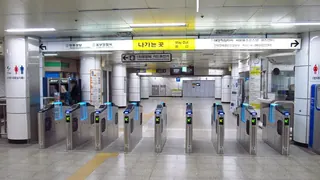 T-money vs WOWPASS vs Climate Card: which transit card to get in 2026
Three cards, one tap at the gate. Here's which one saves you money, depending on how you'll actually move around.
T-money vs WOWPASS vs Climate Card: which transit card to get in 2026
Three cards, one tap at the gate. Here's which one saves you money, depending on how you'll actually move around.
-
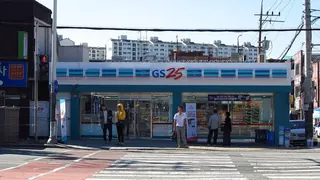 Is Korea expensive? Real daily costs in 2026
Getting around and eating simply is cheap. Barbecue, cafes and taxis are where the money goes, and they add up faster than you'd think.
Is Korea expensive? Real daily costs in 2026
Getting around and eating simply is cheap. Barbecue, cafes and taxis are where the money goes, and they add up faster than you'd think.
- Korea trip checklistA tick-box list that remembers your progress on this device.