Taking taxis in Korea as a tourist (2026)
Seoul taxis are cheap by big-city standards and nearly all take cards. The trouble spots are late nights, airports and drivers who see a tourist.
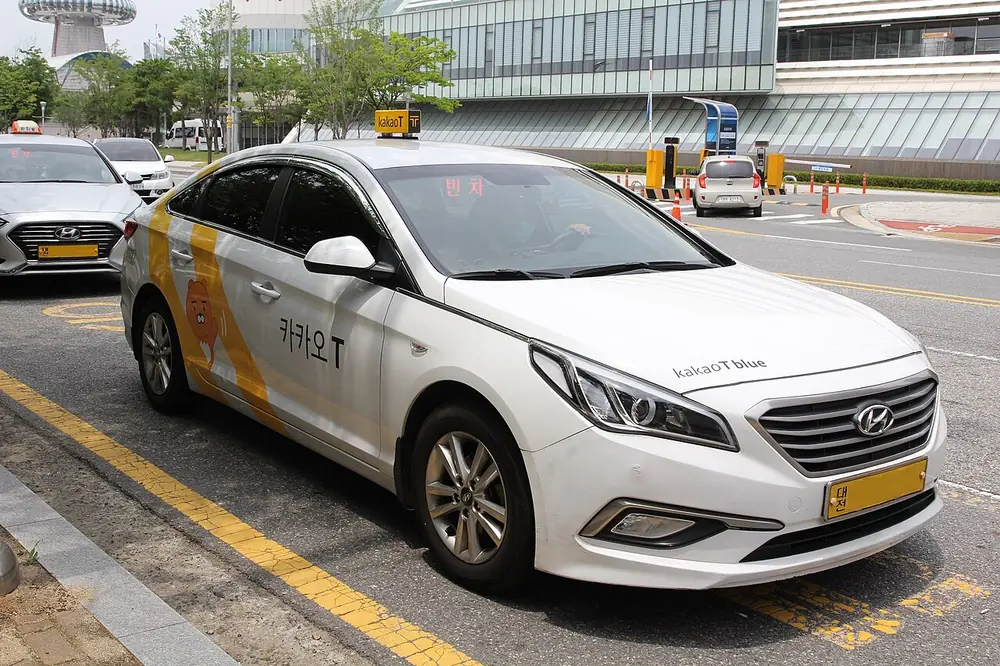
Quick answer
- Regular Seoul taxi: 4,800 won for the first 1.6 km, then 100 won per 131 m. Night surcharge is 20% from 10 p.m., 40% from 11 p.m. to 2 a.m.
- Booking from your phone: k.ride (Kakao Mobility's visitor app) or Uber, both with overseas cards. No Korean number needed.
- Paying: cards work in Seoul taxis, and Alipay+ wallets work in more than 70,000 of them.
- Overcharged: keep the receipt, scan the complaint QR code in the cab, or call 120. For interpretation, call 1330.
- Seoul base fare
- 4,800 won for 1.6 km
- Night surcharge
- 20% from 10 p.m., 40% 11 p.m. to 2 a.m.
- Deluxe base fare
- 7,000 won for 3 km
- Complaints
- 120 Dasan Call Center, 24 hours
The subway will do most of the work on a Seoul trip, but there are moments it can’t: midnight after the last train, a hill neighborhood with a suitcase, four people splitting one short fare. Korean taxis are metered and fairly cheap. The problems visitors run into are narrow and predictable, mostly at airports and late at night, and you can sidestep nearly all of them.
The short version
Hail a regular taxi or book one through k.ride or Uber. Check that the meter is running, pay by card, and ask for the receipt, which now comes in English. A short daytime ride in central Seoul starts at 4,800 won. After 10 p.m. the fare goes up by 20%, and by 40% between 11 p.m. and 2 a.m. If a driver overcharges you or demands a flat price, don’t argue. Pay, keep the receipt, and report it through the QR code in the cab or by calling 120.
What a Seoul taxi costs
These are Seoul’s official fares, in place since February 2023.
| Regular taxi | Deluxe or large taxi | |
|---|---|---|
| Base fare | 4,800 won for the first 1.6 km | 7,000 won for the first 3 km |
| After that | 100 won per 131 m, or per 30 seconds when crawling | Charged by distance and time at a higher rate |
| Night surcharge | 20% from 10 to 11 p.m. and 2 to 4 a.m.; 40% from 11 p.m. to 2 a.m. | 20% from 10 p.m. to 4 a.m. |
| Leaving Seoul | 20% surcharge | 20% surcharge |
At the 40% peak, a regular taxi’s base fare becomes 6,700 won. The city also caps the combined night and out-of-city surcharge at 60% for regular taxis and 40% for deluxe ones. Tolls are added on top of the meter and shown separately on the receipt.
Regular taxis are the standard option, and most cars you’ll flag down are these. Deluxe taxis (mobeom) and large taxis use the higher fare table. The large ones are 9-seaters, which helps a family heading to the airport. Kakao’s premium Black service runs on its own pricing, so check the estimate in the app.
Other cities set their own fares, so the numbers above are for Seoul only.
Getting a taxi from the airport
At Incheon, use the official taxi stands outside arrivals. Incheon Airport warns that people posing as taxi drivers and call vans solicit passengers inside the terminal and overcharge them. Don’t follow anyone who approaches you.
In Terminal 1, regular taxis to Seoul wait at stands 5C, 6C and 6D, and deluxe and large taxis at 7C and 8C. In Terminal 2, regular taxis to Seoul are at 7C and deluxe and large taxis at 7D. Signs list the stands too, and the airport says to confirm on site because maps and stands sometimes differ.
Regular taxis use the meter from the same 4,800 won base fare, with no out-of-city surcharge into Seoul. You pay tolls on top.
International Taxi is a separate, foreigner-only service with English, Chinese and Japanese speaking drivers. It charges flat fares from Incheon Airport to Seoul by zone: 70,000 to 95,000 won in a standard car and 100,000 to 140,000 won in a deluxe or large one. Within Seoul it runs on the meter plus 20%. You have to book at least 24 hours ahead online, through its app, or on 1644-2255, and you can pay in cash or by card. It’s worth it if you land late with lots of luggage and want certainty. Otherwise the Airport Railroad or limousine bus is far cheaper.
Apps that work for visitors
k.ride is Kakao Mobility’s app for foreign visitors. It runs in English, Chinese and Japanese, translates destinations typed in many other languages, and has a live translation feature for talking to the driver. You don’t need a Kakao account or a Korean number: sign up with a phone number, Google, Apple or email, then register an overseas credit card. Payment is automatic, with no cash option, and rides cost slightly more than on Kakao T because of a service fee. It’s growing fast: sign-ups rose 65% in the first half of 2026.
Uber also operates Uber Taxi in Seoul, and you can use the same Uber app and account you have at home. That’s the lowest-effort option if you already use it.
Kakao T is the app most Koreans use. It has Korean and English but no live translation, and k.ride is the version Kakao Mobility built for visitors, so start there.
App bookings help in two ways: you see an estimate before you get in, and the payment happens through the app, so there’s no argument at the end. Seoul has also asked foreigner-focused apps like k.ride and TABA to show tolls separately from the metered fare, so you can compare them with the final charge.
Paying: cards, T-money and Alipay+
Seoul made card readers mandatory in all its taxis in 2012, so a foreign Visa or Mastercard is the normal way to pay. If the reader fails, try inserting instead of tapping, then try another card. Our foreign card guide covers what else to carry.
If you use Alipay, AlipayHK, Touch ‘n Go, GCash, PayPay or another Alipay+ wallet, more than 70,000 Seoul taxis accept it. So do more than 15,000 eZL taxis in Daegu.
Ask for the receipt every time. Since December 2025, Seoul taxi receipts show the total fare, pick-up and drop-off times, and any night or out-of-city surcharge in English, along with the 120 complaint number. It’s your evidence if something goes wrong.
Overcharging, refusals and your rights
Most rides are uneventful. The cases Seoul actually deals with are specific: drivers refusing short trips, drivers waiting at airports or tourist spots and quoting inflated flat prices, and padded late-night fares to hotels. Foreign passengers filed 487 complaints through Seoul’s reporting system between June and December 2025, with unfair fares the most common. In one confirmed case, a driver charged 56,000 won for a Gimpo Airport to Yeonhui-dong ride when the meter showed 32,600 won.
What to do:
- Insist on the meter. If a driver quotes a fixed price on a regular taxi, get out and take the next one.
- Note the car. Photograph the license plate. It takes two seconds.
- Scan the QR code. Seoul has stickers with a complaint QR code in about 71,000 taxis. It opens a short survey in English, Chinese or Japanese.
- Call 120. The Dasan Call Center takes taxi complaints 24 hours a day. Seoul investigates reports and fines drivers when an overcharge is confirmed.
- Call 1330 for language help. The Korea Travel Hotline (+82-2-1330 from a foreign phone) answers in English, Japanese, Chinese, Russian, Vietnamese, Thai and Malay, and can help you explain the problem.
Refusing a passenger is illegal. Seoul has run a taxi enforcement squad for foreign passengers since 2015, and its 2025 crackdown targeted short-trip refusals at Incheon and Gimpo airports and in tourist areas like Myeongdong.
What to say
Many drivers speak little English, so have your destination ready in Korean, ideally a Naver Map pin or the address in Hangul. A few phrases help:
- Yeogi-ro ga-juseyo (여기로 가주세요): Please go here.
- Kadeu dwaeyo? (카드 돼요?): Can I pay by card?
- Yeogiseo sewo-juseyo (여기서 세워주세요): Please stop here.
- Yeongsujeung juseyo (영수증 주세요): Receipt, please.
Our phrase cards have these in large type you can show the driver.
What we’d do
For a first trip to Seoul: install k.ride (or use Uber if you already have it) before you land, and use it for late nights and any ride with luggage. Flag cabs on the street for short daytime hops.
From Incheon with a family or a late arrival: a regular taxi from the official stand, metered, is fine. Book International Taxi only if you want an English-speaking driver and a fixed price, and can commit 24 hours ahead.
Late at night: expect the 20% to 40% surcharge, and treat it as normal. A flat price quoted by the driver isn’t. Ask for the receipt, and if the numbers don’t match, report it. It takes two minutes and Seoul does follow up.
Questions people ask
How much is a taxi from Incheon Airport to Seoul?
Regular taxis run on the meter from a 4,800 won base fare plus tolls. International Taxi charges flat fares of 70,000 to 95,000 won to Seoul depending on the zone, and you must book at least 24 hours ahead.
Can I pay for a Korean taxi with a foreign credit card?
Yes. Seoul made card readers mandatory in its taxis back in 2012. Apps like k.ride and Uber also charge your registered overseas card automatically.
Can a taxi driver refuse to take me?
Refusing passengers is illegal, and Seoul runs enforcement against drivers who turn down short trips or tourists. Note the car number and report it.
Do I tip taxi drivers in Korea?
No. Pay what the meter says. Tipping isn't expected anywhere in Korea.
Is there a taxi app that doesn't need a Korean phone number?
k.ride lets you sign up with a phone number from home, Google, Apple or email and pay with an overseas card. Uber Taxi also works in Seoul with the Uber app you already have.
How we checked this
Change log
- First published.
Sources
- Seoul Metropolitan Government: taxi fares and surcharges (2026-04-03)
- Seoul Metropolitan Government: public transport fares (2025-07-11)
- Seoul Media Hub: Seoul taxi night surcharge starts at 10 p.m. (checked 2026-10-09)
- Seoul Metropolitan Government: English taxi receipts and foreigner complaint reports (2026-01-21)
- Seoul Metropolitan Government: crackdown on taxi overcharging of foreign visitors (2025-08-06)
- Seoul Metropolitan Government: card readers mandatory in Seoul taxis (2012-05-09)
- Incheon International Airport: taxis (checked 2026-10-09)
- International Taxi: fares and booking (checked 2026-10-09)
- Asia News Network: Seoul adds English to taxi receipts to curb overcharging of foreigners (2026-01-20)
- Korea JoongAng Daily: Kakao Mobility's k.ride app for foreign travelers (2024-06-04)
- Digital Daily: Kakao Mobility expands k.ride to 12 countries (2025-03-27)
- Korea Daily: k.ride sign-ups and Boryeong Mud Festival shuttles (2026-07-08)
- Financial News: Uber Taxi sets up pick-up points for BTS event in Seoul (2026-03-20)
- Korea Times: Alipay+ demand in Korea (2025-12-09)
- VisitKorea (Korea Tourism Organization): Duty Free & Tax Refunds (1330 helpline) (2025-10-21)
Spotted something out of date? Tell us and we'll re-check it.
Read or use next
-
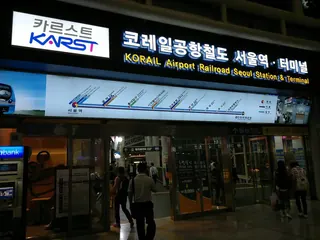 Incheon Airport to Seoul: every option, priced (2026)
Train, bus or taxi. The right answer depends less on price than on where your hotel is and what time you land.
Incheon Airport to Seoul: every option, priced (2026)
Train, bus or taxi. The right answer depends less on price than on where your hotel is and what time you land.
-
 Paying in Korea with a foreign card in 2026: what works and what doesn't
Your card will work at most counters. It's the apps, kiosks and booking sites that catch visitors out, and that's where you need a plan.
Paying in Korea with a foreign card in 2026: what works and what doesn't
Your card will work at most counters. It's the apps, kiosks and booking sites that catch visitors out, and that's where you need a plan.
- Show-on-your-phone Korean phrase cardsTap a phrase and it fills your screen, ready to show.
-
 T-money vs WOWPASS vs Climate Card: which transit card to get in 2026
Three cards, one tap at the gate. Here's which one saves you money, depending on how you'll actually move around.
T-money vs WOWPASS vs Climate Card: which transit card to get in 2026
Three cards, one tap at the gate. Here's which one saves you money, depending on how you'll actually move around.